
Blog
Industrial Ventilation Equipment Manufacturer Scope Beyond the Fan Assembly

FANS · DAMPERS · SILENCERS · CONTROLS
A complete fan quotation can still leave a ventilation package with missing interfaces. An EPC buyer choosing an industrial ventilation equipment manufacturer should identify which fan, airflow-control, acoustic and electrical items must work together. TWOSUN’s portfolio includes industrial centrifugal and DTF axial fans, ventilation dampers, silencers, air terminals and fan control cabinets. Begin by drawing the supply boundary around the equipment actually required. Then confirm the selected components, their performance assumptions and the responsibilities retained by the project designer and installer. A broad product range does not automatically establish a turnkey system contract.
The distinction becomes clear when an industrial building package is divided between suppliers. A 4-79 centrifugal fan is ordered from the fan manufacturer, a damper comes through the duct contractor and the controls are purchased separately. Each item can meet its own description while the combined installation remains poorly coordinated. The missing work is often the interface between those descriptions.
An industrial ventilation equipment manufacturer should receive a package boundary
Start with the process or building duty and mark the equipment included in the enquiry. TWOSUN lists five application ranges, but a project usually needs a defined subset of that portfolio. For an industrial exhaust route, a 4-79 centrifugal assembly may be the starting fan discussion. For a metro or tunnel axial route, a DTF arrangement may be relevant. The connected components should follow the selected application.
A 4-79 fan package should identify the inlet and discharge interfaces
Show the connected ductwork and the components located near the fan. Identify who supplies each transition, support, connection and airflow-control item. The final 4-79 offer should state the selected fan arrangement and the assumptions used in its performance selection. A separate duct package should not quietly change those assumptions after the fan is approved.
AMCA’s industrial fan specification guidance describes the information needed to communicate fan construction and accessory requirements. Its role here is general specification background. The actual included items and acceptance records must be agreed for the TWOSUN equipment offered to the project.
A DTF axial package needs its operating modes and connected components identified
For a DTF enquiry, state the airflow, pressure basis, mounting direction and intended modes. Identify connected dampers, silencers and the relevant control interfaces. TWOSUN’s metro and tunnel range includes these associated components, but the order still needs to specify which are included and how they relate to the selected fan.
A tunnel contractor coordinating a shaft fan should also identify the responsibilities for structural supports, electrical supply and system sequence. The fan manufacturer’s equipment scope and the designer’s system responsibilities should be visible together. Do not infer responsibility for a complete tunnel ventilation strategy from the availability of DTF fans and control cabinets.
Industrial ventilation equipment selection must include accessory pressure effects
A damper or silencer is not only a line item beside the fan. It forms part of the air path and can affect the pressure requirement. The fan selection should use the relevant component information and installed arrangement. If a component is selected after the fan, return its effect to the engineering review rather than assuming the original duty remains valid.
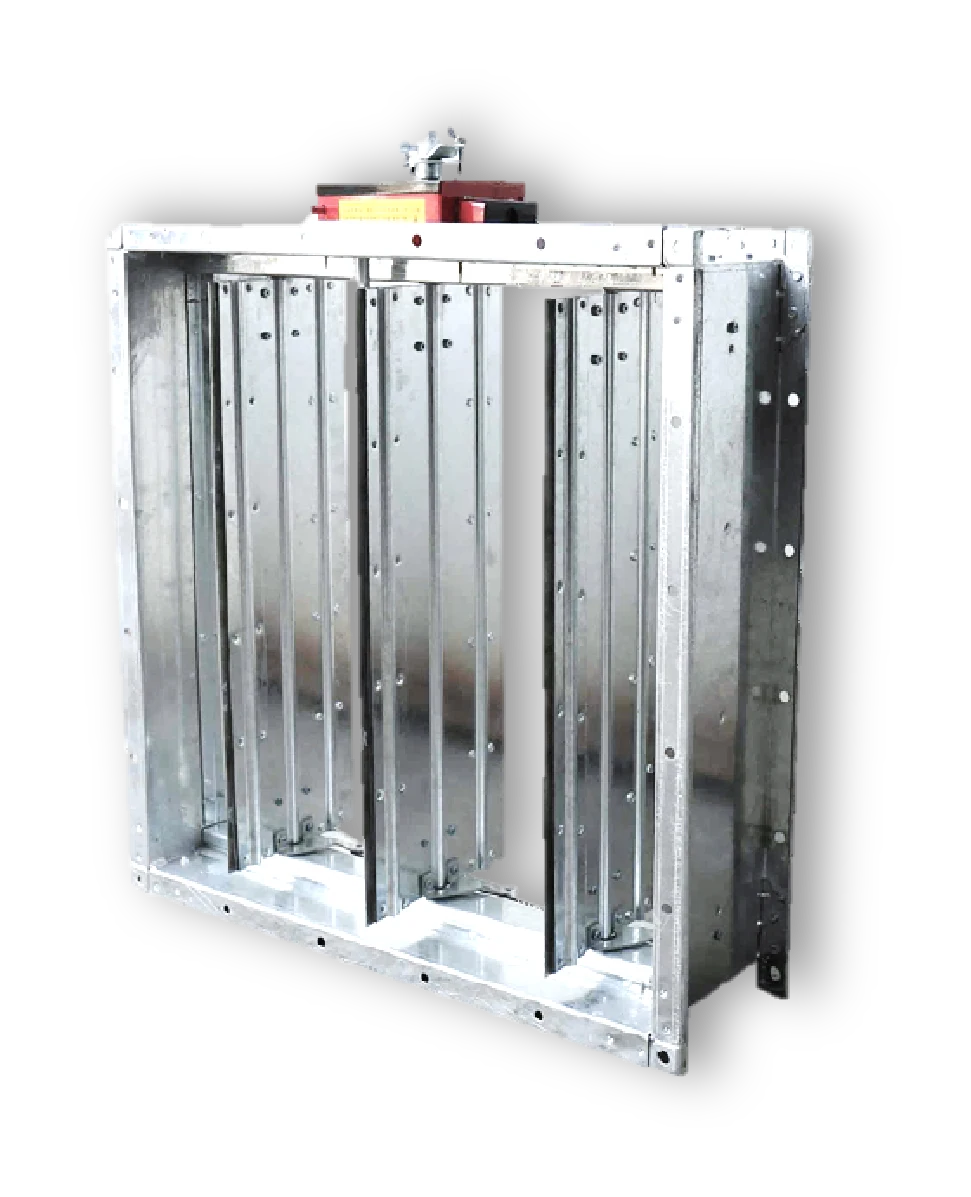
A ventilation damper needs a stated function and operating position
TWOSUN lists ventilation dampers as system components. State whether the project needs an airflow-control, isolation or other defined function, then request the appropriate selected equipment and evidence. A general damper description does not establish every leakage, fire, smoke or specialist approval requirement. The required function should come from the project specification.
For a 4-79 process route, show where the damper is located and which operating positions matter to the duty. For a DTF route, coordinate the damper condition with the defined fan operating modes. The manufacturer and designer need the actual arrangement to assess the performance assumptions. Treating every damper as fully open in every mode can conceal a different installed condition.
The receiving and installation documents should preserve that function. A damper supplied for one air route should be matched to the corresponding equipment reference and installed orientation. If the project requires an actuator or a particular status indication, confirm whether it is included and identify the relevant interface. The public damper offering should not be interpreted as an automatic commitment to every actuator or control function.
A silencer should be selected with the fan duty and acoustic path
TWOSUN’s silencer range provides an acoustic-component discussion, but the required attenuation, dimensions and resistance must be established for the project. Retain the selected silencer’s pressure-loss information with the fan duty. A component added for acoustics can otherwise introduce a pressure requirement that the original fan selection never included.
Also distinguish duct-borne sound from sound radiated through an enclosure or structure. The guide to fan sound and occupied-space assessment explains why the receiving environment matters. A silencer quotation alone does not guarantee the sound level at an occupied room or external receiver.
General fan system-effect guidance also shows why component position matters near a fan. For the selected 4-79 or DTF assembly, review the inlet and outlet geometry, including nearby dampers and transitions. A component’s straight-through pressure-loss figure may not describe every effect of a poor connection arrangement.
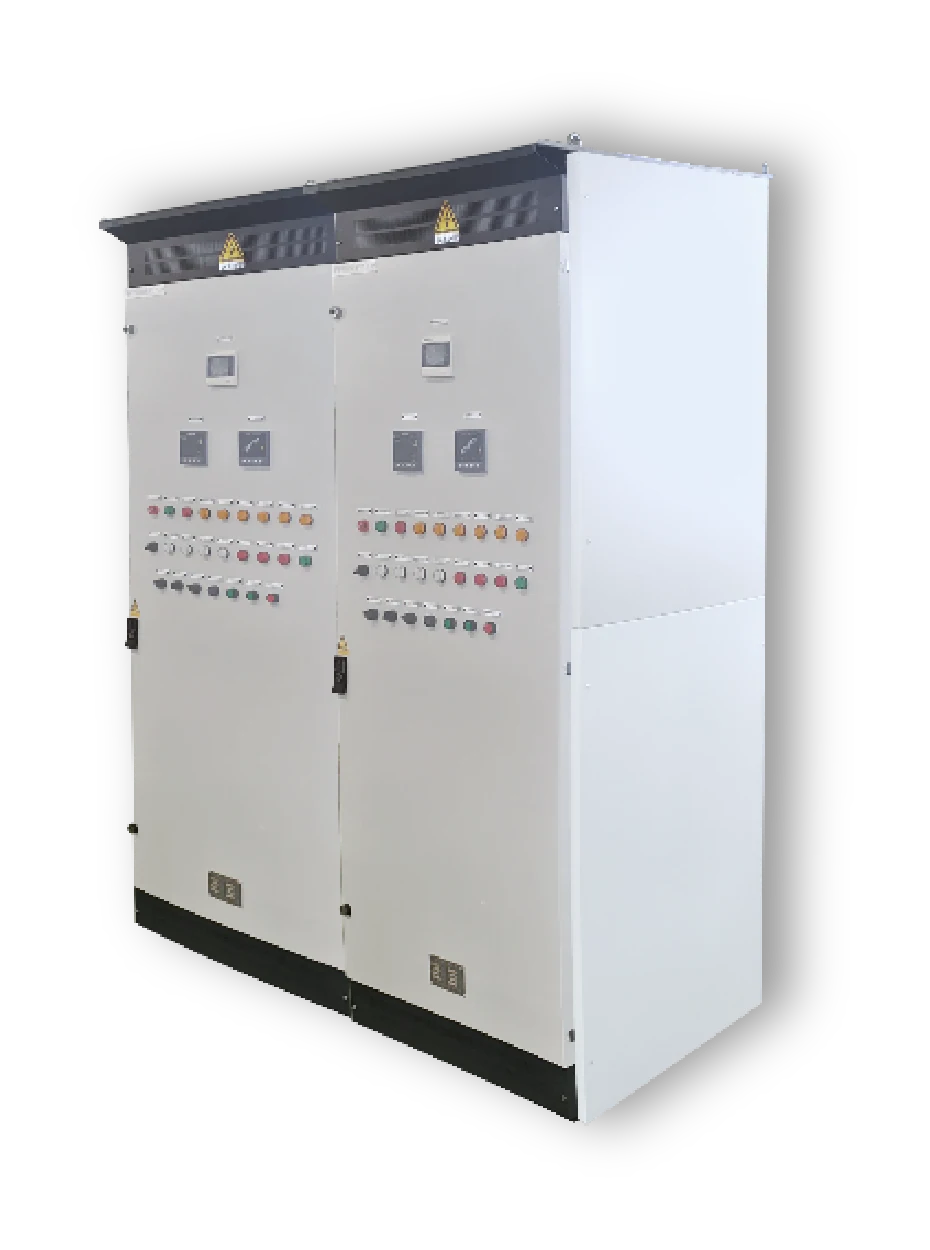
Fan control cabinets need a defined electrical and operating scope
TWOSUN lists fan control cabinets in its product portfolio. That supports an enquiry about a coordinated equipment package; it does not establish the contents of every cabinet. Specify the intended fan motors, electrical supply, operating modes and required interfaces. Ask the supplier to state the equipment and functions actually included in the proposed cabinet.
A DTF control interface should connect to a project-defined sequence
The ventilation designer should define the required operating modes and the conditions for changing between them. The control supplier should identify how its offered equipment addresses those requirements. If direction, speed or damper status matters to the sequence, include the relevant signals and responsibilities in the interface schedule.
Do not assume a cabinet includes a particular controller, drive, communication protocol or emergency function unless the confirmed offer says so. For a DTF package, the selected motor and control arrangement must agree with the submitted fan information. The presence of a control-cabinet photograph does not identify the configuration supplied for an individual order.
A 4-79 process fan should retain its motor and operating limits in the control handoff
For a process centrifugal assembly, identify the intended operating range and the relevant supplier restrictions. The process and electrical designers need those limits when developing the control arrangement. An adjustable drive should not be treated as permission to operate the selected fan at any requested speed or system condition.
If the process changes after the equipment is ordered, review whether the fan and cabinet information still agree. A revised motor arrangement, supply frequency or operating mode can affect both packages. Keep the accepted revision with the fan schedule and electrical documents so the control contractor is not programming against an earlier selection.
Where several fans are included, identify which motor and operating information belongs to each cabinet circuit or separately supplied control item. A 4-79 process fan and a DTF axial assembly may have different duties and operating restrictions. The electrical submission should make the intended associations clear without relying on the installer to infer them from a broad ventilation-package description.
Air terminals and building fan routes need a coordinated resistance schedule
TWOSUN also lists vents and air terminals in its building ventilation range. Their selected performance belongs in the system calculation where they affect the air route. For a building package using GDF duct fans or another selected configuration, identify the terminals and operating conditions included in the design duty.
A second buyer scenario is a commercial refurbishment where the fan is approved before the room layout is finalized. The terminal count and duct route then change. The revised building arrangement should trigger a review of the fan duty and connected components. The fact that the manufacturer can supply several item types does not make late design changes aerodynamically neutral.
The GDF installation brief explains how access and connection routes can also constrain a building package. Keep those physical constraints beside the resistance schedule. A coordinated equipment list should describe an installation that can be assembled and maintained as well as one that meets the required airflow.
Request separate records for fans, dampers, silencers and control cabinets
The fan, damper, silencer and control cabinet answer different acceptance questions. Request the selected fan performance and arrangement, the relevant damper information, the silencer’s selected data and the cabinet’s confirmed scope. Do not ask a company certificate to stand in for all of those equipment-specific records.
TWOSUN describes fabrication, aerodynamic measurement, balancing and inspection in its manufacturing and testing information. Match the agreed checks to the equipment and project requirements. A mechanical balance record concerns a rotating assembly; it does not establish a damper function or prove a complete control sequence.
Where specialist approval is required, confirm the current document and covered configuration. TWOSUN warns that approvals apply within their defined scope. An approval associated with one application range should not be transferred to unrelated components in the package. Similarly, association membership is distinct from product-performance certification.
Set the review points around the actual equipment sequence. The 4-79 arrangement may need mechanical approval before fabrication, while the control cabinet may require an agreed interface schedule before its configuration is finalized. A silencer selected later should still return to the resistance review. Coordinating those named decisions prevents the package from progressing through separate approvals that no longer describe the same system.
Keep any proposed exception visible in the responsibility schedule. If the fan supplier excludes a transition, if the damper comes from another party or if site controls must provide part of the sequence, identify that boundary before approval. A clearly bounded offer is more useful than a broad package label that leaves each contractor assuming another has included the missing item.
Match delivered fans and system components to their project references
Each fan, damper, silencer and control cabinet should retain the project reference that identifies its intended installation. For distributors consolidating several configurations, the fan and blower range-planning guide explains how that identity should survive receiving, storage and onward supply.
For dispatch, agree how the fan, dampers, silencers and cabinet will be marked and matched to the equipment schedule. Separate components should retain the references needed by receiving and installation teams. A package containing several similar dampers or fan assemblies needs more than a general product-family label to prevent an incorrect installation.
TWOSUN shows wooden export packing and describes shipment coordination. Confirm the actual packing dimensions, component supports and storage instructions for the supplied items. A long silencer, a centrifugal fan and an electrical cabinet can create different handling and preservation questions. Do not assume the packing shown for one item defines protection for the complete order.
Coordinate the delivery sequence with the installation plan. Duct components may be needed before access closes, while a cabinet may require a different receiving arrangement. Ask for dates against the named equipment groups and agreed inspection milestones. TWOSUN’s public information does not establish a universal lead time or staged-delivery commitment for every ventilation package.
Approve the package when its boundaries are clear enough for the next contractor to act without guessing. The selected 4-79 or DTF fan should connect to defined components, the control scope should address an agreed sequence, and the documents should identify what was supplied. That is the practical value of buying from an industrial ventilation equipment manufacturer with a coordinated range.
