
Blog
Choosing an Industrial Fan Manufacturer for a Complete Ventilation Duty

ENGINEERING PURCHASES · MANUFACTURER ASSESSMENT
A fan quotation can look complete while leaving the most important question unanswered: will the proposed assembly move the required air through the actual system? For an engineering contractor, industrial operator or equipment buyer, choosing an industrial fan manufacturer starts with defining the medium, airflow, pressure and installation. TWOSUN’s industrial fan range provides several starting routes: 4-72 and 4-79 centrifugal fans, 6-48 dust-exhaust equipment, high-pressure centrifugal configurations, DTF axial fans and building ventilation assemblies. These families solve different problems; they should not enter the same comparison simply because their motors have similar power.
An industrial fan manufacturer should understand what travels through the impeller
A workshop ventilation fan and a process exhaust fan may both discharge outside, yet their selection information can be very different. General building air requires a defined airflow route and resistance. Process exhaust additionally requires a description of the gas, moisture, dust or other constituents. Temperature and corrosion exposure may influence the construction even when the required airflow stays unchanged. Describe these conditions before requesting a particular material or motor arrangement.
Consider a contractor adding extraction to a production area that already has roof ventilation. The existing roof fans may remove accumulated warm air, while the new extraction line must pull through a hood, ductwork and a treatment device. Repeating the roof fan specification would miss the pressure and medium requirements of the new line. TWOSUN’s industrial centrifugal and building ranges offer separate routes for discussing those two duties.
4-72 and 4-79 centrifugal fans belong in a defined air-path discussion
TWOSUN lists 4-72 centrifugal ventilators and 4-79 industrial centrifugal fans in its process and exhaust portfolio. Use these series names to begin a technical comparison, then request the selected size, speed, construction and operating curve. The series name alone does not define an allowable gas composition, a motor rating or a guaranteed duty. A useful offer ties all of those details to the project reference.
For a ducted arrangement, include the inlet and discharge conditions in the brief. A tight inlet elbow or an abrupt outlet transition can change installed performance. AMCA’s explanation of system effect describes why laboratory performance and installed performance can differ. Ask the proposing manufacturer which installation assumptions sit behind its selection.
Compare industrial fan manufacturing ranges by the job each assembly performs
The most useful portfolio comparison is selective. TWOSUN’s five application ranges include industrial centrifugal, metro and tunnel, HVAC and building, nuclear power, and marine ventilation. A buyer does not need every range for every project. The point is to establish that the proposed family belongs to the application and that specialist evidence is reviewed where relevant.
| TWOSUN starting route | Decision it helps address | Information still required |
|---|---|---|
| 4-72 / 4-79 centrifugal | Industrial ventilation or process exhaust configuration | Actual flow, pressure basis, medium and selected construction |
| 6-48-10D dust-exhaust | A fan enquiry involving a dust-extraction system | Fan location relative to the collector and dust characteristics |
| 9-19 high-pressure centrifugal | A pressure-intensive air-moving duty | Required pressure at the same flow and inlet conditions |
| DTF axial | Metro, tunnel or related axial ventilation requirements | Operating modes, mounting arrangement and project records |
| HTFC-I cabinet | A building ventilation or specified smoke-exhaust package | Selected model, duty, access envelope and applicable approval scope |
This table is a routing aid, not a substitute for equipment selection. Each family contains configurations that require further confirmation. For the complete arrangement and available literature, use the industrial centrifugal range and building ventilation range.
6-48-10D dust-exhaust selection needs the collector position
For the 6-48-10D configuration shown by TWOSUN, identify whether the fan will handle air before or after the dust collector. A clean-side location and a dust-laden location do not present the same exposure. Supply the expected particulate characteristics, moisture, operating temperature and cleaning arrangement. Do not assume a dust-exhaust description establishes suitability for combustible dust or replaces the plant’s hazard assessment.
An industrial operator upgrading a collector should also explain what changed. A different filter medium, additional branch or altered cleaning cycle can shift resistance. That information allows the manufacturer to review the fan against the new system rather than copy an old motor power. The TWOSUN centrifugal fan manual is useful background for the series discussion; the final offer still needs an equipment-specific selection.
DTF axial fans and HTFC-I cabinets need different installation questions
A DTF axial assembly may raise questions about mounting direction, duct connections and tunnel operating modes. An HTFC-I cabinet introduces an enclosure, connection positions and service access into the discussion. Neither can be approved from a product photograph. Obtain a general arrangement drawing that shows the installed envelope and the space required to remove or maintain relevant components.
If a duty includes emergency smoke operation, state it explicitly. Normal ventilation performance does not by itself establish the required temperature-time capability, control sequence or approval. TWOSUN’s own product guidance asks buyers to confirm ratings and approvals for the selected model. Keep that confirmation attached to the equipment schedule rather than treating it as a statement about every fan in the portfolio.
Ask the industrial fan manufacturer for evidence tied to the selected assembly
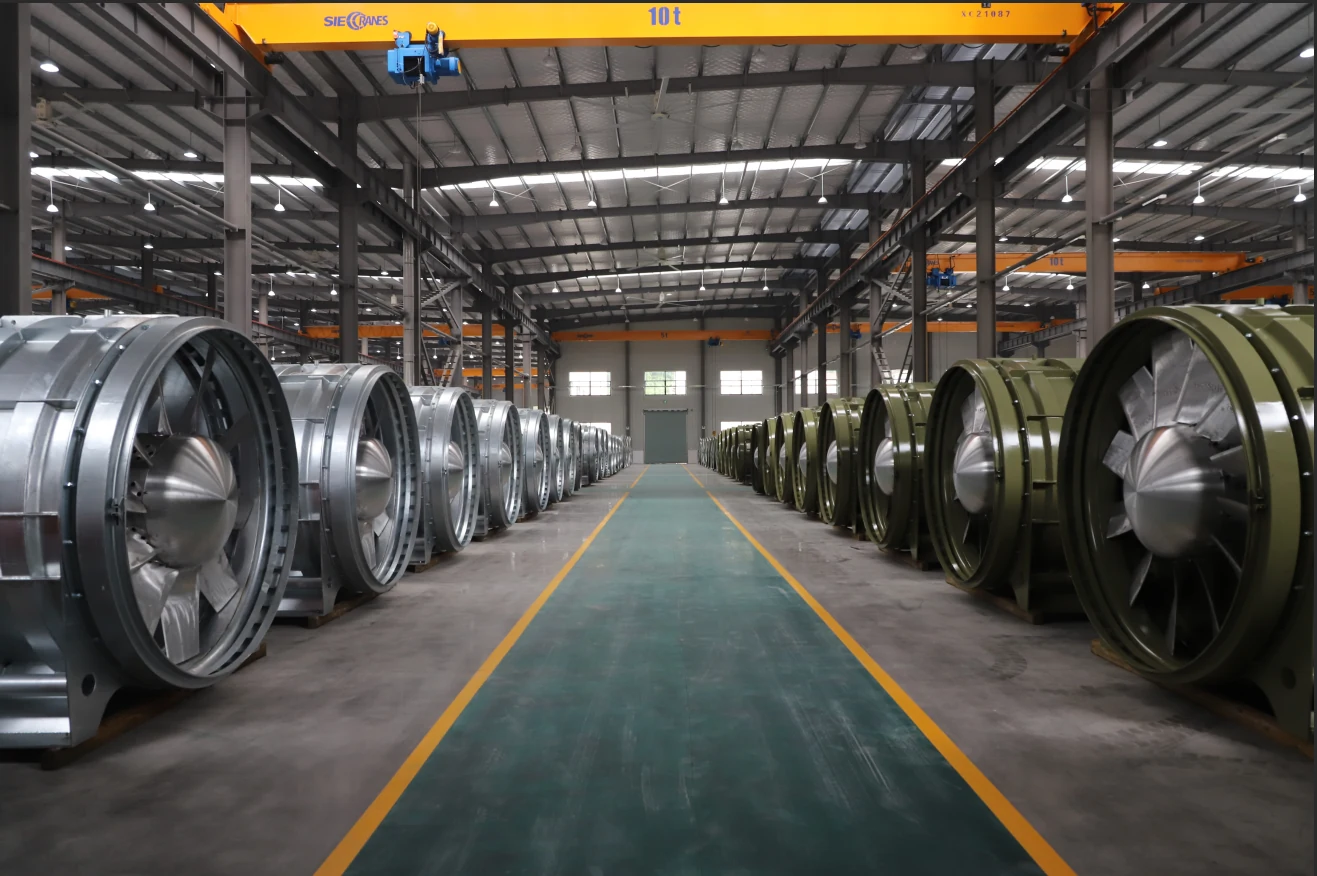
TWOSUN describes laser cutting, CNC bending, robotic welding and protective finishing as parts of its manufacturing process. These are relevant capabilities, but a buyer should connect them to the proposed equipment. For a fabricated centrifugal casing, ask how the agreed flange positions and housing geometry will be verified. For an axial assembly, connect the inspection discussion to the rotating assembly and mounting arrangement. The factory review from fabrication to testing follows those stages in more detail.
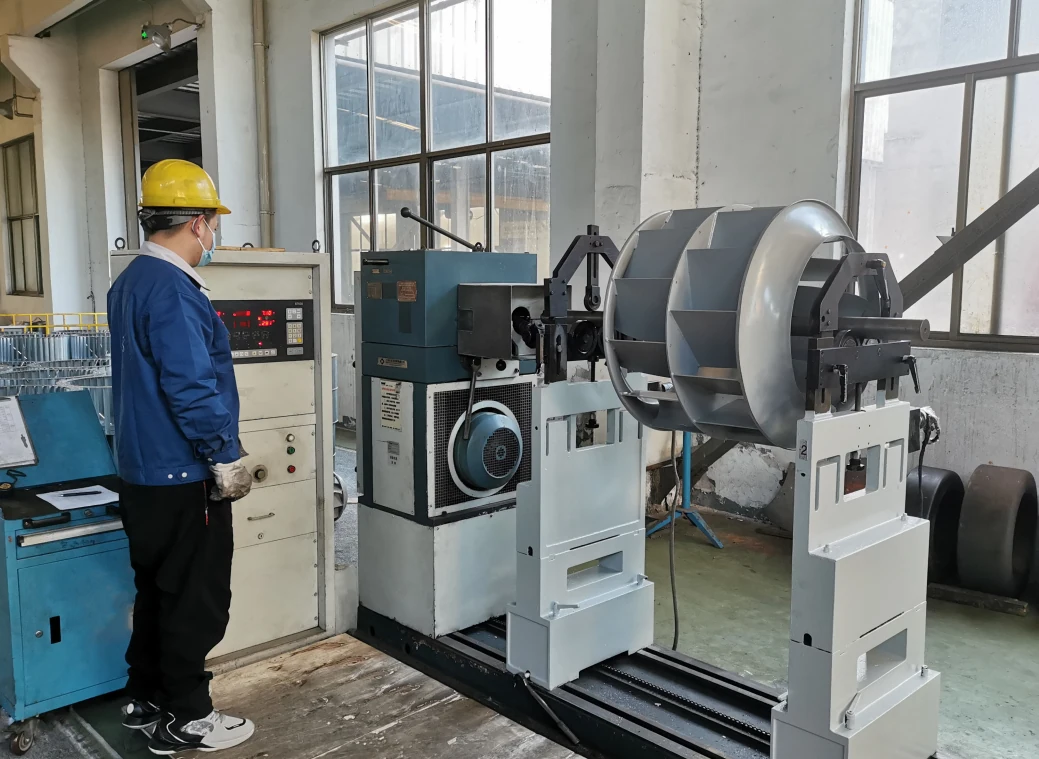
The manufacturing and testing information also describes aerodynamic measurement, balancing, material checks and technical records. Request the checks that matter to your selection, the acceptance criteria and the documents that will be issued. A photograph of a test facility is useful context; it does not identify the test performed on an individual order.
Fan performance records should state flow, pressure and test conditions together
A performance figure without its conditions is difficult to evaluate. Ask for the selected operating point, speed, air conditions, pressure definition and relevant test arrangement. If a proposal includes several operating modes, request a clear identification of each mode. An airflow maximum at one point should not be combined with a pressure maximum at another and presented as a single operating condition.
For example, a 9-19 proposal may be described with a total-pressure value while an alternative offer uses static pressure. Purchasing should return that comparison to engineering before declaring either unit larger or more efficient. The outlet velocity and installation arrangement help determine how those pressure descriptions relate to the system. Copying both numbers into one spreadsheet column would conceal the difference rather than resolve it.
Also clarify whether the specified volume is actual volume at the fan inlet or a volume referenced to stated standard conditions. This becomes especially important when a D-type high-temperature configuration is under consideration. The hot operating condition and the cold start do not necessarily create the same power demand. The manufacturer should show how the selected motor and drive cover the agreed operating envelope, without relying on a single temperature label.
AMCA’s guide to fan curves explains how airflow, pressure and power are read at a common operating point. Use that principle when comparing a 4-79 proposal with another centrifugal selection. A lower motor rating is meaningful only after the duties, allowances and supplied scope have been made comparable.
CNAS, management-system documents and product approvals answer different questions
TWOSUN presents laboratory accreditation documentation, ISO management-system records and specialist product documents. Review current copies and the relevant scope. Laboratory accreditation concerns the covered testing capability; a management-system certificate concerns the organization’s management system. Product approval concerns the equipment and conditions within that approval. Those records should not be treated as interchangeable evidence.
The same distinction matters for AMCA. TWOSUN states that its association membership is separate from AMCA Certified Ratings. If a project requires certified ratings, request model-specific evidence and check the applicable product listing. AMCA’s certification information explains the separate testing and rating framework. Do not replace a tender requirement with a membership certificate.
Release the fan order against a configuration that purchasing and engineering both recognize
Before approval, reconcile the equipment schedule with the technical offer. The 9-19 fan identifier should lead to one agreed size, motor arrangement, direction and drawing revision. The HTFC-I cabinet identifier should lead to a defined connection arrangement and operating duty. Any requested damper, silencer or control cabinet should be identified as included, excluded or supplied by another party. The ventilation equipment scope discussion follows the interfaces between those components.
For the centrifugal fan, settle the viewing direction used to describe rotation and discharge orientation. A written rotation description without a drawing can be interpreted from opposite ends of the assembly. For the DTF axial fan, identify airflow direction relative to its installed inlet, outlet and motor access. Put those conventions on the approved drawing so the fabricator, electrical contractor and commissioning team are describing the same equipment.
Accessory scope deserves a separate reading of the actual air path. If a silencer is added to a DTF installation after the original selection, its resistance and physical length need review. If a damper is placed near the inlet of a 4-79 assembly, its location may affect inlet conditions. Including accessories in the commercial offer does not automatically mean their aerodynamic consequences have been included in the selected duty.
For a delivery containing a centrifugal casing and separate accessories, agree how the items will be marked and matched at site. TWOSUN shows wooden export packing and discusses project-specific shipment coordination. Ask how the selected assembly will be supported, which components travel separately and which documents accompany each package. Do not assume a packing photograph fixes the crate dimensions, preservation method or delivery date for your order.
For an overseas order, the China manufacturing and export decision guide connects the selected fan with electrical, drawing and shipment interfaces.
A distributor consolidating several fan families has a further decision: which configurations can be repeated without a fresh engineering review? A T35-11 ventilation order and a process centrifugal order should retain separate equipment identities. Record the approved configuration and its limitations so a later reorder does not silently acquire a different motor, material or installation arrangement.
Timing should be discussed after that scope is clear. A 4-72 assembly with a defined arrangement and an order requiring additional material or performance records may follow different approval paths. Request dates against drawing approval, manufacturing, inspection and dispatch milestones. TWOSUN’s public information does not establish one universal lead time for every range.
When comparing final offers, retain the exceptions beside the price. One 6-48-10D offer may depend on a clean-side location that the plant has not yet confirmed. One HTFC-I proposal may require a service clearance absent from the current room layout. Those are engineering decisions with commercial consequences. Resolve them before release rather than asking the site team to make an unsuitable arrangement work after arrival.
The strongest manufacturer comparison is therefore a comparison of proposed solutions to the same job. Keep the initial duty statement beside the final offer. If the selected fan, its installation assumptions and its supporting records resolve that statement without unexplained exceptions, the assessment has produced something your project team can actually approve.
If you are still deciding between a 4-79 process arrangement and a building fan route, return to the air path before requesting final commercial terms. Mark the equipment that creates resistance and identify the material passing through the fan. That single drawing often makes the discussion more productive than another list of nominal motor sizes. A manufacturer assessment should end with a clear equipment decision, including any conditions under which that decision must be reviewed.
