
Blog
HVAC Cabinet Fan Manufacturer Selection for Access, Pressure and Operating Modes

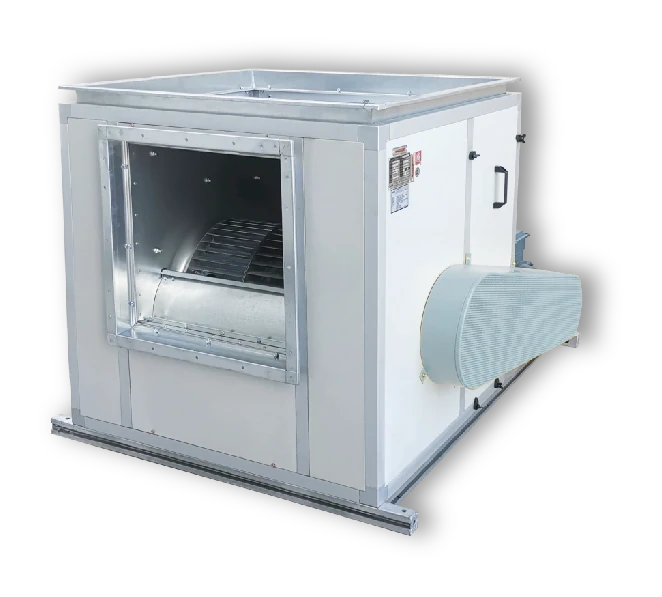
The cabinet fits the room, but the service panel opens towards a wall. That is a poor point to discover that an equipment comparison considered only overall dimensions. When assessing an HVAC cabinet fan manufacturer, review the fan duty, motor arrangement and service envelope together. TWOSUN’s building range includes HTFC-I, HTFC-II and HTFC-III cabinet configurations, alongside GDF centrifugal duct and SWF mixed-flow fans. Start with the selected cabinet variant and the required operating modes. Then establish how that actual assembly will enter the room, connect to the ducts and remain accessible after installation.
A building-services contractor may be choosing a fan while the plant-room walls and door openings are already fixed. The available space appears adequate until the duct connections, electrical access and maintenance route are added. A cabinet-fan decision should therefore use a coordinated drawing rather than a standalone product outline.
An HVAC cabinet fan manufacturer should identify the complete HTFC arrangement
TWOSUN lists HTFC-I as a centrifugal smoke-exhaust cabinet route, HTFC-II as a double-speed cabinet range and HTFC-III as a backward centrifugal range. Those descriptions help route the enquiry, but they do not provide the complete selected designation. Obtain the size, speed, motor information, construction and arrangement associated with the offer.
HTFC motor location and HTFC form should not be confused
The original TWOSUN building manual discusses A-type arrangements with the motor outside the housing and B-type arrangements with the motor inside. It also discusses forms I, II and III. These descriptions concern different aspects of the equipment. Do not assume that an A or B motor arrangement is interchangeable with a Roman-numeral form, or infer the complete assembly from a short HTFC label.
Ask the supplier to reconcile the current product description with the selected catalogue arrangement and drawing. This is especially useful where a schedule contains only HTFC-II without the information needed to identify the actual motor and connections. The final equipment record should make the offered construction understandable to the installer rather than requiring an interpretation of several abbreviated names.
HTFC-III backward centrifugal selection needs its own performance data
TWOSUN’s current portfolio identifies the HTFC-III route with backward centrifugal construction. The building manual also discusses forward- and backward-curved double-inlet centrifugal arrangements. These are product-design distinctions, not a universal indication of which selection is best. Request the performance and power information for the proposed assembly at the project duty.
Double inlet describes an airflow arrangement of the centrifugal impeller; it should not be read as a promise of two independent fans or a redundant operating system. Likewise, a double-speed cabinet description concerns operating modes rather than the number of fan assemblies. Keep these terms separate in the HTFC schedule so a short product label does not acquire a function the proposal never included.
For a contractor comparing two cabinet offers, retain the impeller arrangement, selected speed and motor alongside the airflow and pressure. A smaller enclosure or lower nameplate power does not establish equivalent performance. The comparison should answer the required duty and installation conditions before purchase price becomes the deciding number.
Cabinet-fan operating modes must be stated before the HTFC motor is approved
State the required airflow, pressure definition and inlet conditions for normal operation. If the design requires another operating mode, identify its duty separately. The selected cabinet and control arrangement should address those conditions. A double-speed product description is not evidence that both speeds meet an unspecified ventilation schedule.
HTFC-II double-speed operation needs two identifiable duty entries
For the HTFC-II route, request the proposed motor and performance information for the modes actually offered. Keep the relevant airflow, pressure and control requirements together. The electrical designer needs the selected equipment information, while the ventilation designer defines what each operating mode must achieve.
In a commercial building using a reduced ventilation mode outside occupied hours, the lower-duty operation is still part of normal use. It should not be left as an unreviewed switch position. Ask the supplier to identify the supported arrangement and relevant operating limits, then coordinate the project sequence with that information.
Smoke-exhaust duty should remain separate from ordinary cabinet ventilation
TWOSUN’s HTFC literature discusses smoke-exhaust applications, while its current site requires approval scope and ratings to be confirmed for selected equipment. State the required emergency duty, temperature-time condition and documentation in the enquiry. Do not treat a cabinet enclosure, double-speed motor or family-level catalogue statement as a complete emergency approval.
If a proposal is intended only for normal ventilation, keep that scope clear. If emergency operation is required, request current model-specific evidence and coordinate the connected control and installation requirements with the responsible designer. An approval for one arrangement should not be transferred to another HTFC selection without the relevant documentation.
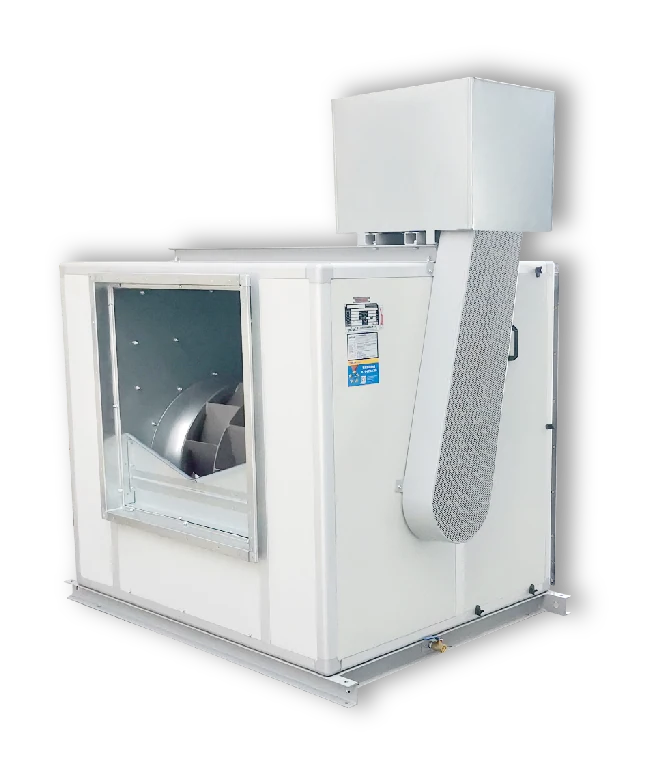
Three cabinet drawings should agree before the plant-room layout is frozen
The product outline, coordinated installation drawing and maintenance arrangement should describe the same fan. For the selected HTFC assembly, identify the inlet and outlet connections, mounting, electrical access and relevant service faces. A cabinet that occupies the available floor area may still require space outside that footprint for maintenance.
The HTFC service face must remain accessible after the ducts are connected
Ask which panels or components require access and obtain the manufacturer’s service requirements for the selected arrangement. Show the adjacent wall, ductwork and cable routes on the coordinated drawing. Do not approve panel access from a workshop photograph taken before those obstructions existed.
A second practical situation is a hotel plant room with a replacement fan entering through an existing doorway. The old unit may have been installed before the surrounding services were completed. Check the current delivery and removal routes independently. The fact that the old cabinet once entered the room does not prove the new selected assembly can follow the same route today.
Motor-inside and motor-outside cabinet arrangements create different access questions
The A/B distinction described in TWOSUN’s manual is useful during this review. An outside-motor arrangement and an inside-motor arrangement may require different service access. Confirm the configuration actually offered, then use its drawing and instructions to plan access. Do not select an arrangement solely to reduce one overall dimension without reviewing the work it must allow.
If the project relies on removing a duct section or adjacent panel to reach the fan, identify that intended service route explicitly. The installation designer should confirm it is practical and preserved in the finished room. A nominally removable part is not a useful access provision if its fasteners or handling space become inaccessible.
Check the connection faces independently from the service faces. An HTFC cabinet can have the required inlet and outlet dimensions while its access arrangement still conflicts with the room. Ask the supplier to identify both on the selected drawing, and do not assume a panel or connection can be moved to another face without a reviewed configuration. That distinction is especially useful when several offers use similar overall cabinet dimensions.
The duct connections can change the HTFC cabinet’s installed performance
A cabinet format does not remove the effects of poor inlet or outlet geometry. Show the proposed bends, transitions, dampers and silencers with the selected fan. General technical guidance on system effect explains why disturbed flow near a fan can reduce installed performance. Its product arrangements are background examples rather than TWOSUN installation instructions.
A tight HTFC inlet needs review alongside the pressure schedule
Request the installation assumptions associated with the selected performance data. If the coordinated layout differs, ask the supplier and designer to review the effect before approval. Do not assume an increase in speed or motor power can compensate for every poor connection without consequences for sound, input or mechanical operation.
For a refurbishment, preserve a record of the approved HTFC selection and the retained duct geometry. If a late change adds a bend or accessory, identify the change and return it to the duty review. This helps the project distinguish an equipment issue from an installation change instead of treating every airflow shortfall as a reason to replace the fan.
GDF and SWF alternatives change the installation route, not just the fan name
TWOSUN’s GDF centrifugal duct and SWF mixed-flow ranges offer separate routes where an inline arrangement suits the project. Compare their selected duty and service requirements with the cabinet proposal. They should not be treated as dimensionally or acoustically equivalent because all three can be connected to ducts.
Also define what the HTFC cabinet is being asked to supply. A fan enclosure does not automatically include filtration, heating, cooling or a complete air-handling function. TWOSUN lists other ventilation equipment separately in its wider portfolio. If the project needs additional treatment components, identify them and their resistance explicitly rather than assuming the cabinet-fan quotation includes an unlisted system.
The GDF access and connection guide is useful when the project considers moving the fan into a ceiling route. The changed location may alter resistance, acoustic paths and the removal method. Revisit those conditions rather than carrying the cabinet selection unchanged into a different installation.
Cabinet construction should not be mistaken for a quantified acoustic guarantee
TWOSUN’s building manual discusses cabinet frames, surface finishing and vibration-isolation arrangements. Confirm the features included in the selected HTFC assembly. A construction description does not establish the received sound level in an adjacent office or guest room. Obtain the available source sound information at the selected duty and have the project assess the relevant transmission paths.
The technical distinction between sound power and sound pressure matters in this comparison. A silencer can treat a duct-borne path while sound may also travel through the cabinet or supports. The occupied-space fan sound guide explains why those paths need separate consideration.
For the HTFC mounting arrangement, coordinate any specified isolation with the supporting structure and connected services. Do not infer that one flexible connection or a cabinet base interrupts every vibration path. The installation should follow the selected equipment’s requirements and the project’s mechanical and acoustic design.
Approve and deliver one identifiable HTFC cabinet configuration
Retain the complete selected designation, motor information, operating modes, connection arrangement and drawing revision together. TWOSUN describes aerodynamic measurement, balancing and inspection in its testing information. Agree the records relevant to the selected cabinet and any specialist duty. A general company document should not replace the required equipment-specific performance or approval evidence.
Include the conveyed-air description in that record. The original HTFC manual discusses limits for the medium as well as different operating applications. The selected assembly should be checked against the actual temperature, moisture and any entrained material. Do not assume an ordinary cabinet ventilation selection is suitable for a sticky process exhaust or another medium merely because the required airflow is similar.
For dispatch, obtain the actual packing and handling dimensions, not only the installed outline. TWOSUN shows wooden export packing, but the selected cabinet’s supports, separate components and storage instructions need confirmation. Coordinate the route from receiving area to plant room, including the doorway and any turns identified during selection.
If several HTFC cabinets serve different zones, keep the equipment tags and operating information distinct through delivery. Similar-looking enclosures can contain different selections or operating arrangements. The site team should be able to match each cabinet to its approved position and documents without relying on appearance.
Take the final selection back to the room drawing. The chosen HTFC-I, HTFC-II or HTFC-III arrangement should satisfy the stated duty, preserve the required service access and carry the relevant evidence. A cabinet-fan purchase is ready when the equipment can do its ventilation job and the maintenance team can still reach it after the building is complete.
