Blog
When a Custom Industrial Fan Manufacturer Needs More Than a Duty Point

The operating point can be correct while the proposed fan still does not fit the machine. A buyer working with a custom industrial fan manufacturer should identify the physical constraint, process conditions and required evidence before requesting a modification. TWOSUN’s portfolio includes 9-19 centrifugal fans, D-type high-temperature configurations, DTF(R) vertical axial arrangements, GDF duct fans and system silencers. These provide real routes for a project-specific discussion. They do not establish that every requested dimension, material or arrangement is available. The useful enquiry distinguishes what is fixed by the project from what the supplier can review.
Take an equipment builder placing a centrifugal fan inside a process skid. The required airflow and pressure are known, but the skid frame restricts the discharge connection and the motor access. Asking for “the same fan, made smaller” hides the actual design problem. The supplier needs to know which envelope is fixed, which interface can move and what performance must be preserved.
Start the custom industrial fan manufacturer enquiry with the immovable interface
Mark the constraint on a drawing rather than describing the complete installation as restricted. It may be a skid width, an existing duct flange, a structural opening or a service route. Give each fixed interface a clear reference. Then identify where the manufacturer may propose a different arrangement. That distinction prevents both parties optimizing a dimension the project could have changed easily.
A 9-19 discharge position should be tied to the skid coordinate system
For a pressure-oriented centrifugal enquiry, identify the required inlet and discharge positions and the viewing direction used to describe rotation. The selected 9-19 arrangement should be shown against the skid frame and connected equipment. A written request for a left or right arrangement is vulnerable to interpretation if the two drawings use opposite viewing directions.
If an outlet connection can move, say so. The supplier may be able to propose a different selected arrangement for review rather than modifying a fixed connection unnecessarily. If it cannot move, keep it as a controlled interface. TWOSUN’s public range supports discussing project-specific configurations, while the actual modification and its effect require confirmation in the technical offer.
Existing centrifugal-fan foundations need a separate duty review
A plant replacing an older centrifugal fan may want to retain the base and ductwork. Record those interfaces, but also describe changes to the process since the original installation. The existing footprint is a physical constraint; the old motor rating is not proof of the current required airflow or pressure. Keep those two sources of information separate in the enquiry.
For that replacement, submit the measured connection positions, available access and any reliable original equipment information. Ask the supplier to identify departures in its proposed configuration. Do not assume that a new 9-19 assembly can use the old base, coupling arrangement or discharge geometry simply because the series name appears familiar.
The electrical supply can also be a fixed skid interface. State the voltage, frequency and intended control arrangement before the motor is finalized. If a 9-19 proposal changes its drive or speed to suit a different supply, the selected performance and physical motor envelope need to remain consistent. The enquiry should not treat electrical information as a shipping-destination detail to be filled in after mechanical approval.
Custom industrial fan manufacturing should preserve a defined aerodynamic duty
A change to the air path can affect the performance associated with an otherwise familiar fan. A tighter transition, altered inlet arrangement or added silencer may change what the installed assembly delivers. The project should define the required flow, pressure basis, inlet conditions and operating modes before evaluating a proposed physical modification.
A shortened GDF installation route still needs a complete pressure calculation
TWOSUN lists GDF as a centrifugal duct-fan route. In a constrained ceiling or equipment enclosure, show the proposed transitions and nearby bends. Ask whether the selected arrangement and its performance data address that installation. Moving the fan to gain access can alter the duct route and resistance; the original selection should not remain untouched if its assumptions have changed.
The GDF installation handoff guide follows the delivery, connection and service routes separately. That separation is useful in a custom enquiry because a compact assembly may solve the entry route while leaving the service face inaccessible. The final arrangement needs to satisfy all three routes.
A silencer belongs in the selected fan’s pressure and space envelope
TWOSUN includes silencers in its system-component range. If acoustic treatment is required, state that requirement early and obtain the proposed component’s dimensions and resistance information. A silencer added after the fan envelope is frozen can consume access space or change the duty. It should be part of the reviewed arrangement rather than an unexamined item appended to the order.
AMCA’s discussion of system effect explains why connection geometry can change installed performance. Use the principle to review the actual proposed package. Do not infer a universal allowable bend distance or performance correction from a general article, and do not treat a speed increase as an automatically acceptable substitute for layout review.
Where the project requires several operating modes, show the intended range. The selected fan and control arrangement need to address those states, not simply the highest airflow in the schedule. A physical change that appears acceptable at one duty may still need review across the full intended operation. Keep the supplier’s restrictions with the proposed configuration.
D-type and DTF(R) options show why construction constraints need different answers
A custom enquiry can involve thermal construction, mounting orientation or access rather than a change in overall size. TWOSUN’s D-type high-temperature route and DTF(R) vertical axial route illustrate different conversations. Keep each tied to its application. A proposed solution for one family should not be assumed to transfer to another.
A D-type hot-process arrangement needs the drive environment described
For the D-type enquiry, supply the air-stream temperature profile and the surroundings of the motor and drive. If the fan sits inside a hot skid compartment, show the enclosure and its ventilation conditions. A drive placed outside the gas stream may still experience unsuitable ambient heat. Request the selected construction and operating limits for the actual arrangement.
The thermal-duty guide for centrifugal fan purchases explains why startup, normal operation and the installed drive environment belong in the same brief. A custom casing request should not obscure those conditions or create an unsupported thermal promise.
A DTF(R) vertical assembly requires an orientation-specific drawing
TWOSUN lists DTF(R) vertical axial configurations in its metro and tunnel range. If vertical mounting is a project constraint, specify it at the beginning. Obtain the proposed airflow direction, supports, connections and service envelope. A horizontal assembly photograph or a related family name does not establish suitability for that position.
For a shaft contractor, the available removal route can be more restrictive than the installed envelope. Identify which components must be serviceable and how they leave the shaft area. The manufacturer should review its selected arrangement against those constraints, while the project’s responsible designers verify the supporting structure and installation method.
Materials for a custom fan should follow the process exposure
TWOSUN describes material selection, structural design and protective finishing in its manufacturing information. A custom request should explain the medium, moisture, corrosion exposure and temperature behind a proposed material choice. Naming a material without that context can leave important parts of the construction review unresolved.
For a 9-19 process assembly, identify whether exposure concerns the gas-wetted surfaces, the external environment or both. For a GDF building installation, describe the actual service conditions rather than importing a process-fan construction requirement without a reason. The supplier should confirm what is proposed, while the purchaser should understand which condition that proposal addresses.
Freeze the custom fan against a controlled configuration, not a conversation
Before approval, gather the accepted duty and physical arrangement into one identifiable equipment record. AMCA’s industrial fan specification guidance describes the purpose of communicating construction and accessory requirements. The project should make clear which requirements are mandatory, which are preferences and which proposals remain subject to review.
- For the 9-19 centrifugal arrangement
- Retain the agreed duty, rotation reference, inlet and discharge positions, motor arrangement and drawing revision.
- For the DTF(R) vertical arrangement
- Retain the mounting direction, connections, support interface and service route for the selected assembly.
- For the GDF and silencer package
- Retain the delivered envelope, connected layout, component resistance assumptions and maintenance access.
If the supplier proposes an exception, keep it visible beside the requirement it affects. A revised GDF position, different centrifugal motor arrangement or altered silencer length can be a useful solution, but it needs an engineering decision. Do not let the exception disappear when the commercial offer is copied into a purchase order.
For a modification affecting the inlet or discharge, ask whether the existing performance information remains applicable or whether further selection evidence is required. The supplier should explain the basis of the revised offer. A custom drawing and a familiar catalogue curve do not automatically describe the same aerodynamic arrangement. Keep that relationship explicit when the project approves a changed 9-19 connection or a constrained GDF layout.
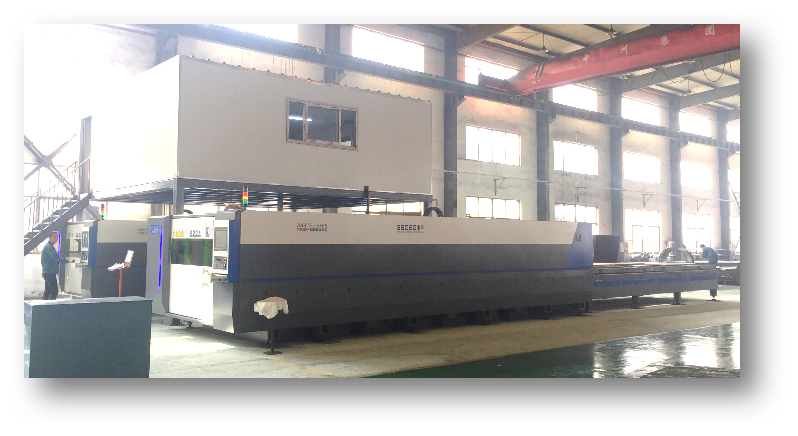
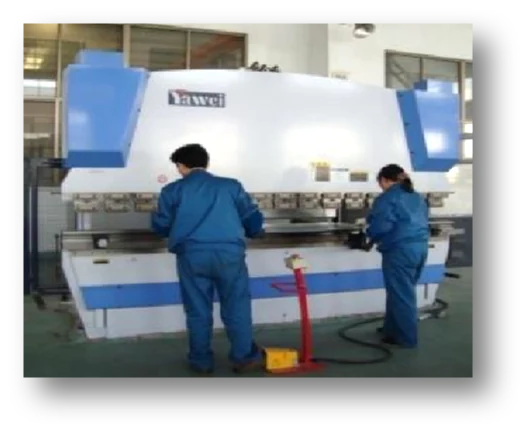
TWOSUN’s manufacturing and testing information describes cutting, forming, welding, aerodynamic measurement and mechanical checks. Tie the agreed inspection scope to the custom features that matter. For a changed casing interface, define how the dimensions will be checked. For a selected rotating assembly, agree the relevant mechanical and performance records.
A modification also needs a clear drawing-approval point. If the skid builder moves the outlet after fabrication has started, the supplier should not be expected to infer the change from an unrelated drawing issue. Identify the revised interface, ask for the effect on the selected arrangement and retain the accepted revision with the order.
If the equipment builder later repeats the custom skid, retain the approved configuration as a controlled reference. A GDF assembly selected for one enclosure should not acquire a different connection or motor arrangement through an informal reorder description. Explain which project conditions remain the same and which have changed, so the supplier can distinguish a repeat order from a new engineering variation.
Pack the custom centrifugal or axial fan for its planned installation
A custom fan can have projecting connections or separately supplied accessories that change the shipping envelope. Ask for the actual packing dimensions and handling information for the selected assembly. TWOSUN shows wooden export packing, but a representative crate image does not establish how your modified arrangement will be supported or delivered.
For a skid project, confirm whether the fan arrives ready to install or with identified separate components. Do not assume site assembly or dismantling is permitted without the corresponding manufacturer instructions. The receiving team should be able to match the fan, silencer and other supplied items to the approved configuration and installation sequence.
Discuss delivery dates against the real approval and inspection milestones. A request for a project-specific interface may require a different drawing review from a repeat configuration. TWOSUN’s public information does not provide one universal customization lead time. Ask for an order-specific proposal once the required scope and documentation are understood.
The custom purchase becomes reviewable when every fixed constraint has an agreed response and every proposed departure has an owner. Keep the selected fan’s performance, physical interfaces and service requirements together. A modification is useful when it makes the actual installation work without leaving the operating duty or acceptance evidence behind.
