
Blog
High Pressure Centrifugal Fan Manufacturer Selection Beyond the Pressure Number

CENTRIFUGAL EQUIPMENT · DUTY COMPARISON
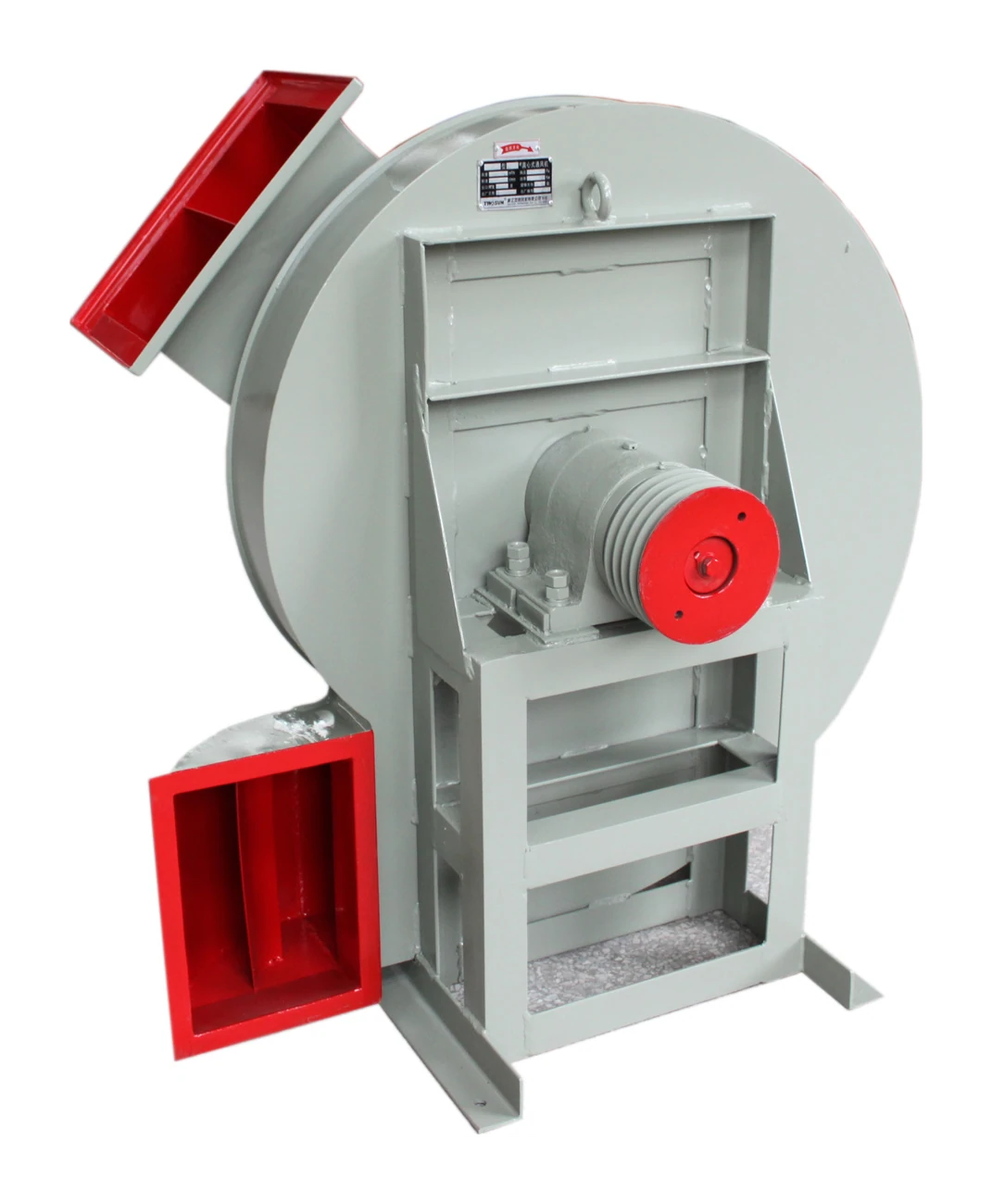
Two offers can both say “high pressure” and still describe different operating duties. A buyer assessing a high pressure centrifugal fan manufacturer should first require the same airflow, pressure definition and inlet conditions in every proposal. TWOSUN lists 8-09, 9-19 and 9-26 high-pressure centrifugal configurations, alongside 4-79 industrial centrifugal and D-type high-temperature equipment. Start with those actual families, then establish which selected size and construction satisfy the process. The largest pressure figure in a catalogue is not the pressure available at every airflow.
Give the high pressure centrifugal fan manufacturer a pressure definition
A pressure requirement should identify whether it is fan static pressure or fan total pressure, and where the system boundary lies. The duct system may contain an inlet device, treatment equipment, valves, transitions and an outlet section. If different suppliers include different boundaries, their figures will not describe equivalent duties even when the units are identical.
Static and total pressure cannot share an unlabeled comparison column
Total pressure includes the velocity-pressure component, while static pressure describes a different part of the pressure condition. The distinction matters when a centrifugal discharge connects to ductwork. ASHRAE’s fan guidance discusses pressure selection in relation to the system arrangement. The project engineer should establish the appropriate basis before the commercial comparison starts.
For a 9-19 proposal, write the pressure definition beside the duty point and the connection arrangement. Do the same for the 8-09 or 9-26 alternative. If one offer only says “pressure,” return it for clarification. Guessing the meaning can make a lower-pressure offer appear to meet a requirement that it has never actually addressed.
Actual inlet volume matters when the process air is warm
State whether the volume is actual flow at the fan inlet or a volume referred to specified standard conditions. Include the temperature and other information needed to establish the inlet density. A hot process and a cold commissioning test can require different interpretation even when both schedules use cubic metres per hour.
A process-equipment buyer may receive a duty from a production engineer and a separate flow figure from a treatment-system vendor. Resolve the reference conditions before requesting a fan. Otherwise, the 9-26 selection may be based on one volume while the duct or treatment equipment has been sized from another. The correction belongs in the shared duty statement, not in an undocumented adjustment made by purchasing.
Compare 8-09, 9-19 and 9-26 centrifugal selections on one common duty
TWOSUN’s product range identifies all three series as high-pressure configurations. That supports a focused enquiry; it does not establish that a particular series is always the best choice. Obtain the selected model, speed and curve for the required condition. Then consider the arrangement, motor and construction alongside the aerodynamic selection.
| Offered configuration | Ask the proposing manufacturer to show | Do not infer from the name |
|---|---|---|
| 8-09 high-pressure centrifugal | The selected duty, speed, motor and installation arrangement | Performance at an unspecified airflow |
| 9-19 high-pressure centrifugal | The pressure basis and operating position on its curve | Interchangeability with another 9-19 assembly |
| 9-26 high-pressure centrifugal | The proposed size, construction and full operating envelope | A universal pressure or temperature capability |
| 4-79 industrial centrifugal | Whether its selected duty covers the actual system requirement | That a high-pressure label is necessary for every process |
| D-type high-temperature | The thermal duty, drive arrangement and selected performance | That temperature suitability follows from pressure capability |
The purpose of retaining the 4-79 and D-type routes in the conversation is to prevent the enquiry becoming a contest between labels. If the process does not require the pressure initially assumed, another centrifugal selection may merit review. If the air is hot, the construction discussion must address temperature even when an aerodynamic high-pressure selection appears suitable.
A 9-19 performance curve should show the proposed operating point
Ask the manufacturer to mark the required airflow and pressure on the curve for the selected size and speed. Read power at that same operating condition. AMCA’s fan-curve explanation is useful background for this comparison. Do not combine the highest airflow from one point with the highest pressure from another.
For a contractor comparing two centrifugal offers, request a clear statement of any selection allowance. One supplier may be allowing for an unresolved duct route, while another may be selecting exactly at the supplied resistance. The difference should be visible. Adding allowances repeatedly at the process, duct and fan stages can produce a poorly matched selection just as easily as omitting them.
Pressure multiplied by volume explains only part of the motor requirement
The aerodynamic work increases with the volume being moved and the pressure rise required. For an illustrative calculation, a duty of 2 cubic metres per second at a total pressure rise of 3,000 pascals represents 6 kilowatts of air power. That is a hypothetical engineering example, not a rating for a TWOSUN model. Shaft input must also account for the selected fan’s efficiency, and electrical input includes motor and drive losses.
This explains why a proposed 9-19 motor cannot be evaluated from pressure alone. A fan moving a smaller volume at high pressure may require less input than another moving a much larger volume at a lower pressure. Request the selected input data at the agreed operating condition. If the offer states electrical input, shaft power and motor nameplate power, keep those descriptions separate in the comparison.
The same reasoning exposes an incomplete price comparison. A lower-priced 8-09 package that leaves the drive or a necessary accessory outside its scope cannot be compared directly with a complete 9-26 assembly. Establish what each quoted power value and assembly description includes. Then review purchase price alongside the operation that the supplied equipment is actually expected to perform.
A high-pressure fan must cover the process range, not just the design point
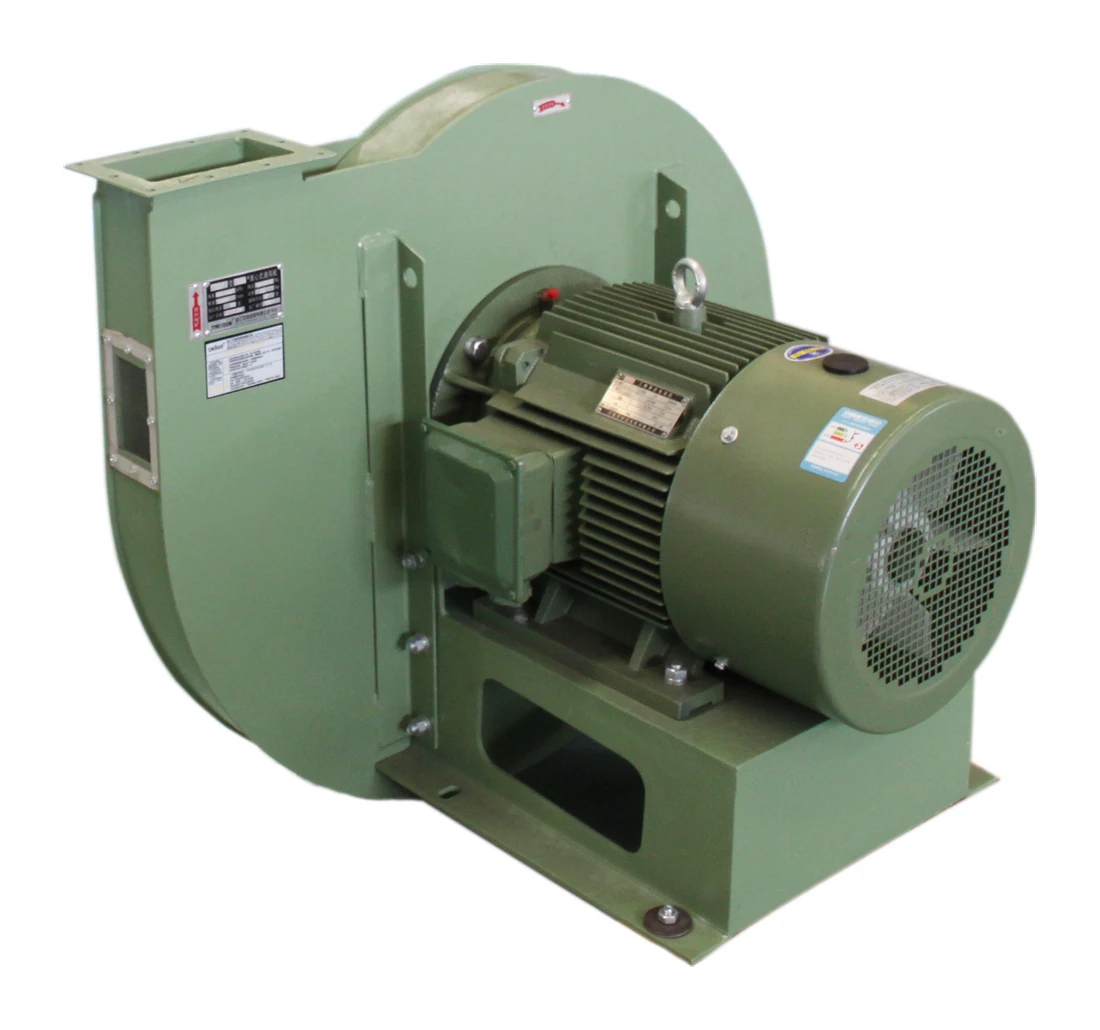
The design point may represent full production, but the fan can also experience startup, reduced production and changes in downstream resistance. Describe those conditions separately. For a 9-26 or 8-09 proposal, ask the manufacturer to identify the intended operating range and any conditions that require control or restriction. A large motor is not a substitute for a suitable aerodynamic operating range.
Changing filter resistance belongs in the centrifugal fan selection
If the high-pressure fan serves a treatment or filtration line, provide the relevant resistance conditions and clarify how they were obtained. A clean system and a loaded system can place the fan at different operating points. Ask whether the offered fan and control arrangement can accommodate the required range without relying on an unapproved change in speed.
Suppose an operator intends to add another production branch later. That future branch should be a separate stated scenario, including its flow and resistance assumptions. It should not become an unexplained percentage added to motor power. The manufacturer can then discuss whether one selected assembly can serve both stages and what changes would require a new review.
For that staged installation, include the branch-control arrangement in the discussion. Closing branches changes the system seen by the fan; it does not merely reduce the number of extraction points on a drawing. Ask where the proposed 9-26 assembly will operate in the first stage and after expansion. Any temporary damper setting or speed limit should be described as part of the operating plan and checked against the selected equipment.
Cold startup and hot running can challenge the same motor differently
For a thermally demanding process, provide the cold-start condition as well as the normal hot condition. TWOSUN’s D-type high-temperature configuration is a relevant route for discussing the drive and thermal arrangement. Its inclusion in the portfolio does not establish the allowable temperature of an arbitrary 9-19 or 9-26 selection.
Ask for confirmation of the motor and drive at the relevant conditions, including any speed-control limits and the specified electrical supply. The appropriate assessment depends on the actual fan and process. Avoid treating a motor power stated for one air density or speed as automatically adequate across every operating mode.
Centrifugal discharge orientation and nearby elbows can change installed performance
A high-pressure fan still depends on the flow entering and leaving it. Show the proposed inlet and outlet duct arrangement, including transitions, dampers and nearby bends. If the equipment is being fitted into a small skid, provide the constrained geometry early enough for the selection to account for it.
AMCA’s system-effect discussion explains why adverse inlet and outlet conditions can reduce installed performance. For a 9-19 assembly, simply increasing speed after installation may introduce power, noise or mechanical concerns. Review the installation and the proposed correction with the manufacturer before making that change.
Approve the high-pressure centrifugal assembly with its medium and mechanical interfaces
Pressure performance does not answer whether the selected construction suits the process gas. Describe moisture, corrosion exposure, entrained particles and any hazard classification. If dust is a defining part of the duty, TWOSUN’s 6-48-10D dust-exhaust route may also need discussion. Do not assume a high-pressure configuration is automatically an appropriate material-handling fan.
For the 8-09, 9-19 or 9-26 assembly actually proposed, request the agreed material and surface treatment, motor and drive arrangement, rotation convention and general arrangement drawing. The drawing should define the inlet, discharge, mounting and maintenance envelope. Where a connection orientation is essential to the skid or ductwork, mark it as a controlled interface.
If acoustic treatment is necessary, include the proposed silencer in the layout and resistance review. A silencer selected after the fan may add length where the skid has no spare space, or resistance that changes the duty. Separate the fan’s sound information from a prediction of sound at the receiver. The surrounding enclosure, duct path and installed accessories all belong to that second assessment.
TWOSUN describes aerodynamic testing, balancing and material checks in its testing and manufacturing information. Match the requested records to the proposed assembly. A balance record and a performance result answer different questions; neither should be replaced by a generic company certificate. Agree any witnessing or document-review points before the production sequence makes them difficult to accommodate. The broader manufacturer assessment for a complete ventilation duty connects those records with the purchasing decision.
For a replacement purchase, retain the old fan information as evidence rather than a mandatory design. An existing 9-19 nameplate can help reconstruct the installation, but it does not prove the present process still needs the original duty. If the treatment equipment, duct route or operating temperature has changed, state those changes alongside the old reference. Ask the manufacturer to explain any proposed departure from the old size or motor arrangement. That explanation gives the maintenance team a reasoned replacement decision instead of a different-looking fan with an unexplained power rating.
Shipping also depends on the selected arrangement. For a centrifugal fan with projecting connections or separately supplied drive components, ask how the items will be supported and identified in the packing list. TWOSUN shows wooden export packing, but the actual packing dimensions, lifting information and preservation instructions need order-specific confirmation. A freight estimate based on a representative product image is not a sound transport plan.
When the final comparison returns to purchasing, the offer should show the same required volume, the same pressure basis and the same agreed operating conditions. Retain the selected curve, drawing and exceptions with the price. If an attractive quotation still depends on an undefined pressure value, it is not yet ready to compete with an offer that has resolved the engineering duty.
