
Blog
Industrial Dust Exhaust Fan Manufacturer Decisions Before a Collector Upgrade

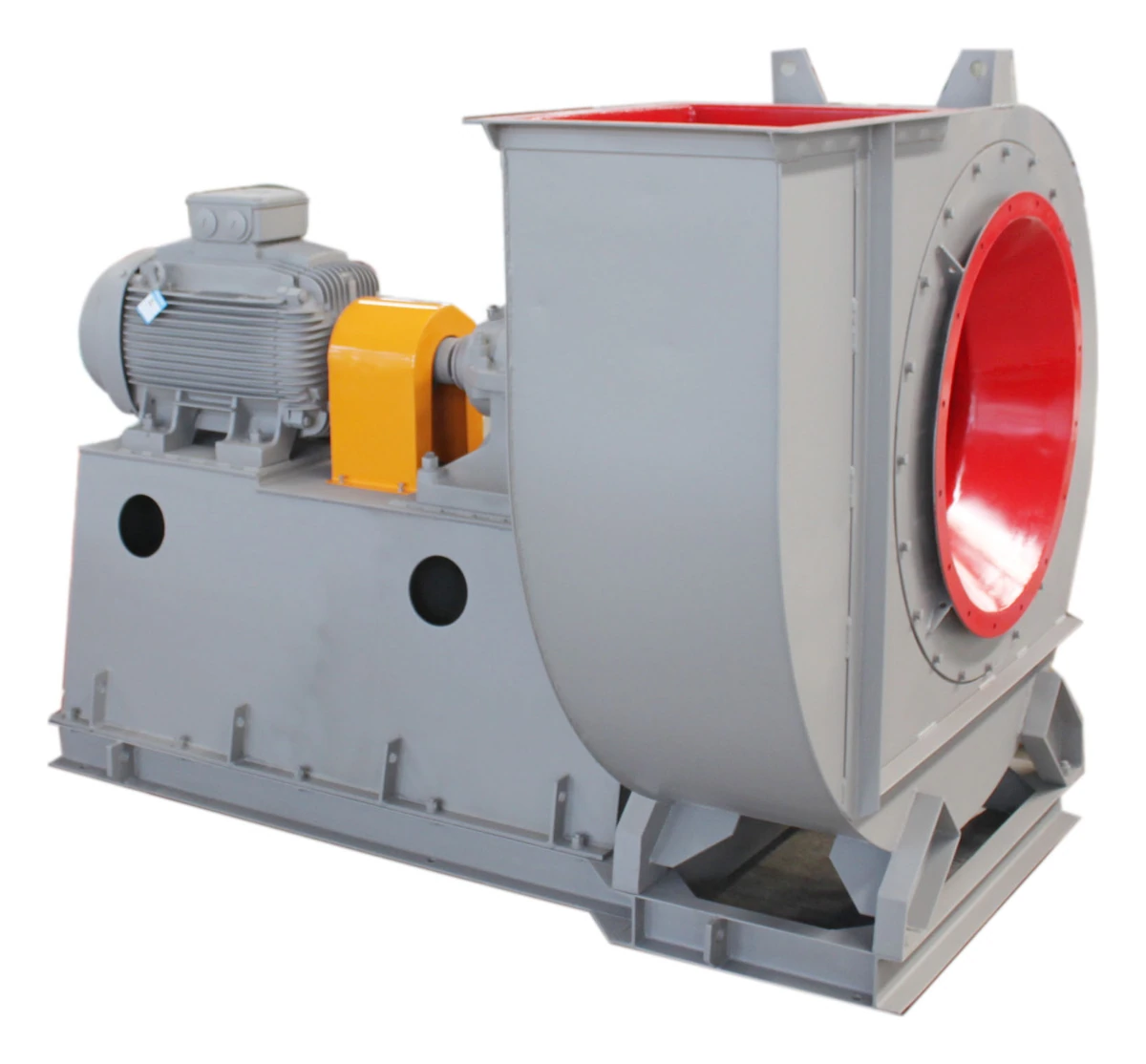
A larger dust collector does not automatically work with the old fan, and a larger fan does not automatically improve capture. When choosing an industrial dust exhaust fan manufacturer for an upgrade, first locate the fan in the system and describe what reaches its impeller. TWOSUN lists 6-48-10D dust-exhaust equipment, 4-72 and 4-79 centrifugal fans, 9-19 high-pressure configurations and D-type high-temperature fans. The 6-48 route is the obvious starting discussion for dust exposure, while other families require a separate review of the actual medium and pressure duty. None should be selected from motor power alone.
Consider a production facility replacing a collector while retaining most of its branch ductwork. The new filter package has different resistance information, and the equipment layout may put the fan on a different side of the collector. That change affects both the operating point and the material passing through the fan. Preserve those two questions separately throughout the purchase.
Show the industrial dust exhaust fan manufacturer where the collector sits
Draw the extraction route from the source through the hood, branches, collector, fan and discharge. Then identify the fan position on that drawing. A fan upstream of a separator can encounter a different dust loading from a fan downstream of a filter. The manufacturer needs the expected inlet condition, not simply the word “dust” in the equipment description.
A 6-48-10D enquiry should describe the particles reaching the fan
TWOSUN identifies 6-48-10D as a dust-exhaust configuration in its industrial range. Give the supplier the dust description, expected loading information where available, particle characteristics, moisture and temperature. State whether the information represents normal operation, startup or an abnormal event. If these conditions are not known, identify the missing information rather than assuming the family name covers every material.
Particle hardness, tendency to adhere and the presence of fibres can create different questions about wear, accumulation and maintenance. Request confirmation of the proposed construction against the actual medium. Do not take allowable particle sizes or concentrations from another manufacturer’s similarly named fan and treat them as a TWOSUN rating.
Describe the process that creates the material as well as its everyday name. Two production lines may call their discharge “dust” while sending quite different mixtures into the extraction route. For the 6-48-10D review, separate the normal particulate from occasional offcuts, foreign objects or moisture carryover. Those conditions should be addressed by the process and equipment designers before the fan’s suitability is confirmed.
A filtered-side centrifugal proposal still needs a residual-medium description
A location after a collector can reduce dust exposure, but “clean side” should not become a substitute for describing the air. Explain the expected residual material, moisture and temperature, and how those conditions are established. A 4-72, 4-79 or 9-19 proposal should be reviewed against that description rather than accepted merely because it sits downstream of filtration.
Twin City Fan’s dust-collector application information illustrates the general distinction between fan types used in different parts of dust systems. Its product models and limits are not TWOSUN specifications. The useful principle is that the fan location and the conveyed medium influence the equipment choice.
A dust-exhaust fan manufacturer needs the collector’s resistance range
The fan must move the required air through the resistance of the complete extraction route. A collector upgrade can change that resistance even if the required capture flow stays the same. Obtain the relevant pressure-loss conditions from the collector designer and include the retained ductwork, hood and discharge requirements in the system calculation.
The 6-48-10D selection should distinguish clean and loaded filter conditions
Do not present a single collector pressure drop without explaining what it represents. The project may need consideration of clean filters, normal loaded operation and other defined conditions. Ask the fan manufacturer to show the selected operating points or range for the proposed 6-48-10D assembly. The system designer should establish which conditions need to be covered and how control is intended to work.
For a plant that adds production branches during the upgrade, branch usage also matters. A fan selected for every hood operating at once may encounter a different system when only part of the line runs. Describe those operating combinations explicitly. Changing damper positions is an operating condition to review, not proof that the selected fan will remain suitable everywhere.
A 9-19 alternative must answer the same flow and pressure basis
TWOSUN’s high-pressure centrifugal range may become relevant where the defined resistance calls for such a selection. It does not remove the medium review. If a 9-19 proposal is offered as an alternative, compare it at the same volume, pressure definition and inlet conditions, then confirm its construction for the expected air.
The guide to comparing high-pressure centrifugal duties explains why static pressure, total pressure and operating conditions need consistent labels. Do not compare one supplier’s maximum catalogue pressure with another supplier’s selected operating point. Those numbers do not establish equivalent extraction capability.
Retain the collector resistance assumptions with the fan selection. If the filter vendor revises the pressure-loss information after the fan is approved, return the change for review. A fan order should not remain frozen against a resistance value that the project has already replaced elsewhere in its design documents.
For the retained branch network, identify which extraction points are required to operate together and which are isolated. The selected 6-48-10D duty should be linked to that stated combination. A pressure measurement near the collector does not independently prove that each remote hood receives its required flow. The installation designer’s balancing and acceptance plan needs to cover the extraction points that matter to production.
Changing the dust fan position can change the maintenance problem
Moving a fan from one side of the collector to the other is an engineering change, not simply a rearrangement of equipment boxes. It changes the inlet exposure and may alter the duct connections, access requirements and operating assumptions. Keep the selected 6-48-10D or other centrifugal assembly tied to the arrangement that was actually reviewed.
Accumulation and wear should be considered for the proposed centrifugal construction
For a dust-laden inlet, ask how the material could affect the rotating assembly and what inspection or cleaning provisions belong to the selected equipment. A general promise of robust construction is not an inspection plan. Obtain the manufacturer’s instructions for the actual fan and agree how access will be preserved in the installed layout.
For a fan installed close to the collector structure, include the access envelope on the layout. A 6-48-10D casing connection that fits during initial installation may become difficult to reach after platforms, pipework or guards are completed. Confirm the required isolation and maintenance arrangements through the project’s responsible professionals. The selected fan’s service instructions should govern access and maintenance, rather than an improvised opening added after commissioning.
A second practical scenario is an operator replacing an existing fan that has recurring vibration after deposits form. The replacement enquiry should include the observed deposits, cleaning history and process conditions, without assuming the same cause applies to every event. The supplier can review the proposed construction; the plant must also investigate the upstream conditions that keep delivering the material.
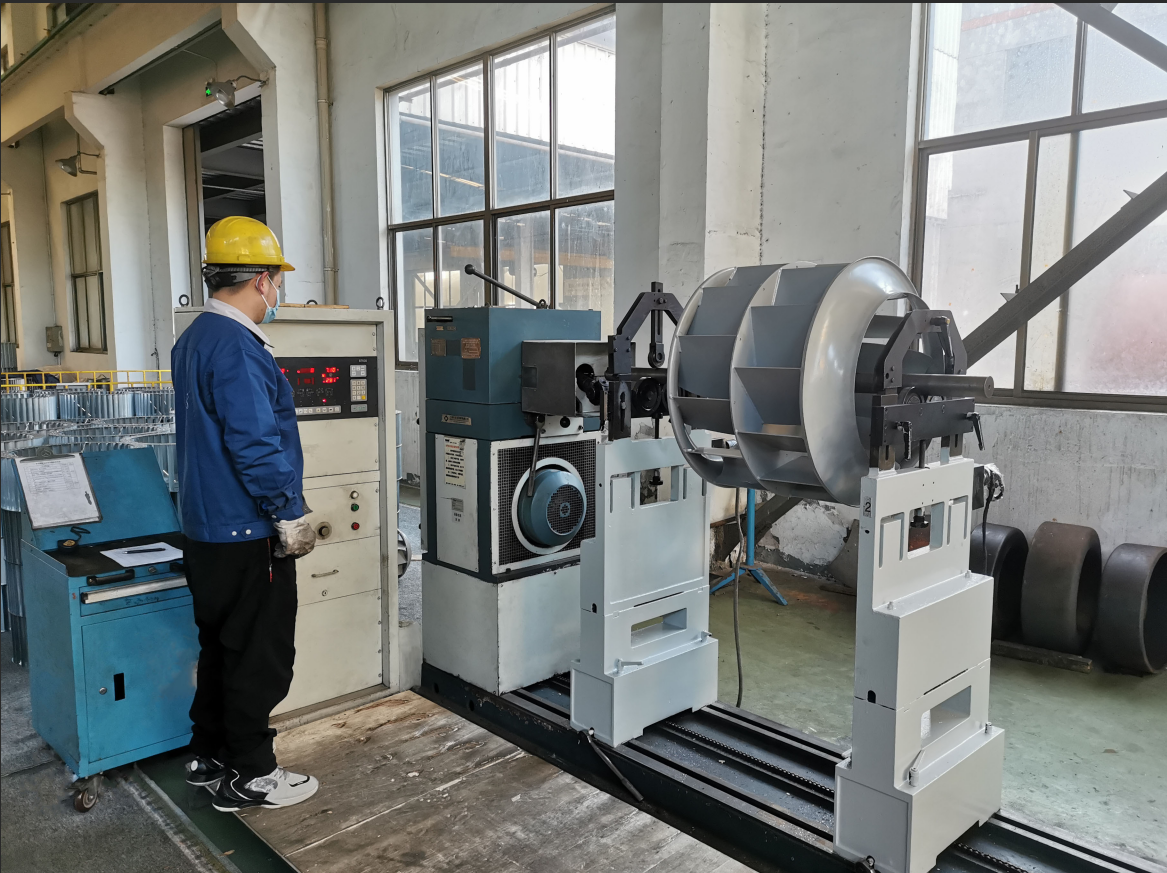
TWOSUN describes balancing and rotating-component checks in its testing information. Those production checks matter, but they do not guarantee that a fan handling an unsuitable or changing medium will remain free of accumulation in service. Separate the supplied assembly’s acceptance from the process conditions that will exist after installation.
D-type high-temperature fans address a separate thermal question
If the dust-extraction air is hot, provide the temperature profile as well as the dust description. TWOSUN lists a D-type high-temperature configuration, but temperature suitability must be confirmed for the selected assembly. A dust-exhaust label does not establish continuous hot-service capability, and a high-temperature description does not establish compatibility with every dust.
Include cold startup, normal running and any defined process upset in the thermal brief. The motor, drive and construction should be reviewed against the relevant conditions. Do not replace this discussion with a fire-smoke rating taken from another product family; emergency thermal duty and continuous process operation are different requirements.
Combustible dust suitability cannot be inferred from the 6-48 series name
Some dusts create fire or explosion hazards. The plant’s competent hazard assessment and applicable project requirements must establish the required protective approach. OSHA’s woodworking hazard guidance identifies dust collection and suitable exhaust arrangements as parts of controlling dust hazards. It does not provide a universal fan selection for every material or jurisdiction.
TWOSUN presents explosion-proof product documentation elsewhere in its portfolio and warns that approvals have defined product scope. That evidence should not be transferred to an arbitrary 6-48-10D, 4-79 or 9-19 assembly. Request the exact equipment and documentation required by the hazard assessment, and verify the covered configuration before approval.
Also distinguish the fan from the wider dust-control system. A fan quotation does not by itself define collection efficiency, explosion isolation, discharge acceptability or worker exposure control. Identify who designs and verifies those functions. The OSHA technical discussion of combustible-dust systems provides background on why the collector and connected equipment need system-level consideration.
The retained ductwork should be reviewed before blaming the replacement fan
During an upgrade, new equipment often connects to old bends, transitions and branch arrangements. Show those connections in the fan enquiry. A 6-48-10D mounted beside an abrupt inlet turn may encounter flow conditions different from the arrangement behind its performance data. Ask the manufacturer to identify the installation assumptions and have the designer review any mismatch.
AMCA’s system-effect guidance explains the general significance of disturbed inlet and outlet flow. The response should be a review of the actual installation and selected equipment. An unapproved speed increase can change power and mechanical demands without correcting the original geometry.
For a 4-79 or 9-19 alternative on the filtered side, the same installation discipline applies. Identify the pressure measurement locations and the conditions under which the upgraded system will be checked. The project’s acceptance plan should distinguish the fan’s selected performance from the performance of the complete extraction network.
Keep the dust-exhaust fan order tied to one approved process arrangement
Before release, reconcile the chosen fan, its inlet-medium description, the collector arrangement and the resistance assumptions. The equipment documents should identify the selected size, speed, motor, rotation and connection orientation. Include any damper or other supplied component by equipment reference, with its role in the operating arrangement clear.
For dispatch, ask how the centrifugal assembly and separate components will be identified and supported. TWOSUN shows wooden export packing, but the packing details and preservation instructions should match the selected fan. If the collector will arrive later, obtain storage guidance for the actual assembly and protect it accordingly rather than leaving the installation sequence to chance.
If the fan and collector are purchased from different suppliers, preserve their agreed connection dimensions and equipment references in both orders. A 9-19 filtered-side alternative or a 6-48-10D dust-laden arrangement may require a different transition and support layout. Resolve that interface before fabrication, including which party supplies the transition. The fan supplier cannot be assumed to include collector connections that never appeared in its confirmed scope.
The upgrade is ready for a fan decision when the plant can explain what reaches the impeller and the designer can explain the resistance the fan must overcome. Use the 6-48-10D route, or a separately reviewed centrifugal alternative, to answer those conditions. A larger motor on an undefined dust system is still an undefined purchase.
