
Blog
Roof Ventilation Fan Manufacturer Choices Before the Roof Opening Is Fixed

ROOFTOP VENTILATION · BEFORE CIVIL RELEASE
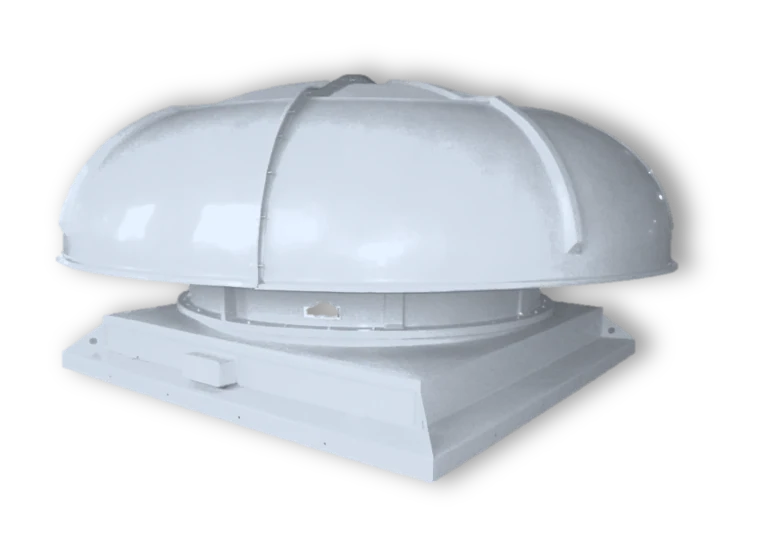
The roof opening is often approved before the final fan arrangement receives the attention it needs. For an MEP contractor or industrial building owner choosing a roof ventilation fan manufacturer, begin with the direction of airflow, system resistance and roof interface. TWOSUN’s building ventilation range includes DWT-I axial roof fans, DWT-II double-speed configurations, DWT-III backward-inclined roof fans, DWS-I roof supply and exhaust arrangements, and RSC centrifugal roof fans. Select the appropriate route before freezing the curb, structural supports and maintenance access. A roof-mounted fan is not defined by its weather cover alone.
Tell the roof ventilation fan manufacturer whether the roof is an inlet or an outlet
A roof penetration can serve an exhaust route or a supply route. The fan, connected components and air path need to match that role. TWOSUN lists DWS-I in its roof supply and exhaust portfolio, while other roof families are described by their axial or centrifugal configuration. Obtain the selected arrangement and airflow direction rather than assuming that any roof fan can be used either way.
For a new warehouse, a contractor may be planning to remove accumulated warm air through the roof. That does not by itself establish where replacement air enters or whether local process extraction is also needed. The ventilation designer should define the complete air route. The fan manufacturer can then assess the roof assembly against that route and the required operating duty.
A DWS-I proposal should identify the selected supply or exhaust arrangement
State the intended direction on the enquiry drawing and retain it on the final equipment schedule. Confirm how the selected roof assembly connects to the interior air route and which accessories belong to it. A generic supply-and-exhaust description is a family-level starting point; it is not permission to reverse an arbitrary delivered assembly without review.
Where the roof contains several openings, the building designer should examine the relationship between air intakes, exhaust discharges and other rooftop equipment. The appropriate arrangement depends on the building, contaminants and applicable project requirements. Do not infer acceptable separation distances or discharge suitability from a roof-fan product photograph.
Compare roof ventilation fan manufacturing ranges against the actual air path
TWOSUN’s axial and centrifugal roof options create different selection routes. Start with the required flow and resistance, then ask for the proposed model, speed and performance data. A large visible impeller or motor does not show how the fan will perform through the specified ductwork. The connection arrangement below the roof is part of the selection information.
DWT-I axial roof fans start a different comparison from a ducted centrifugal route
The DWT-I family is identified as an axial roof configuration. It can be a useful starting point for reviewing an axial roof ventilation duty, provided the selected model meets the required operating point and environment. State whether the air reaches the fan through a short opening, a vertical duct or a more complex network.
For a factory building with several extraction branches converging below the roof, the duct resistance may be a major part of the duty. Do not repeat a DWT-I selection used elsewhere on the site simply because the requested airflow is similar. Compare the complete system resistance and the actual proposed fan curve before assuming the same family or size is appropriate.
DWT-III and RSC centrifugal options require their own selected data
TWOSUN describes DWT-III as a backward-inclined roof range and RSC as a centrifugal roof fan. Those descriptions support a focused comparison where a centrifugal roof arrangement is being considered. Request the selected performance, motor information and dimensions for each offer. The family names do not establish equal capacity or identical installation interfaces.
The building fan technical manual provides original product literature, including roof configurations. Use the section relevant to the proposed unit. Keep the final selection and approved drawing as the purchase basis rather than combining a performance table from one variant with dimensions from another.
If the system has both everyday and peak-demand modes, show both duties. A fan that satisfies a high-flow condition may need a different review at its regular operating condition. The manufacturer should describe the proposed operating arrangement, while the building designer defines which modes the ventilation system needs and how they are controlled.
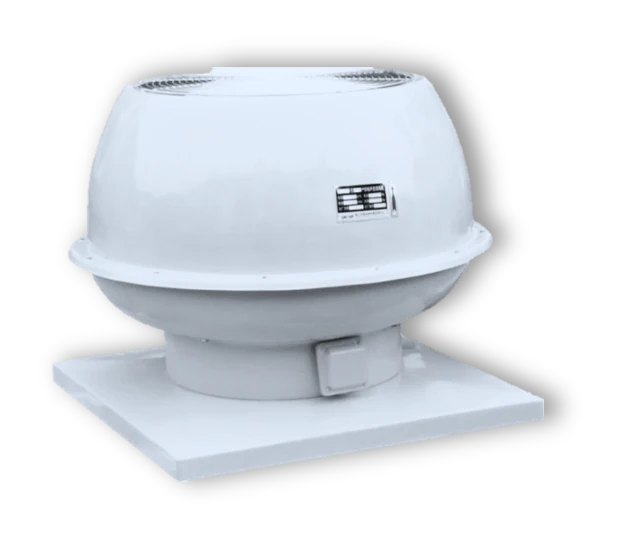
The duct approach below a DWT or RSC fan can undermine the roof selection
Roof fans are sometimes positioned where the building layout leaves only a tight horizontal duct turn beneath the opening. That geometry deserves review before the curb height and fan position become fixed. Greenheck’s discussion of system effects identifies roof-exhaust inlet arrangements as a source of installed performance loss. Its examples illustrate a general issue rather than a TWOSUN installation prescription.
A DWT inlet needs the proposed elbow and damper shown on the drawing
Send the roof section, not only the plan view. Show where the duct turns, where a damper sits and how the transition reaches the fan inlet. Ask the supplier which conditions its selected performance assumes. The designer can then decide whether the actual connection needs revision or whether additional resistance must be considered.
In a refurbishment, the existing horizontal duct may be difficult to move. That does not make it irrelevant. A replacement DWT-III or RSC assembly should be reviewed with the retained geometry visible. Increasing speed to recover lost airflow can change power and sound; it should not be the first unexamined response to an installation constraint.
DWT-II double-speed operation should be tied to two stated duties
TWOSUN lists DWT-II as a double-speed roof range. Identify the airflow and pressure requirements for the intended modes, and obtain the motor and control information for the selected configuration. Two speeds are a construction or operating feature, not proof that either mode meets an unspecified ventilation requirement.
If one mode is intended for a special duty such as emergency smoke operation, state the required approval and temperature-time condition separately. Do not infer a smoke rating from a double-speed description. TWOSUN’s current product guidance requires ratings and approvals to be confirmed for the selected equipment and application.
Freeze the roof opening only after the fan interface is defined
The fan’s overall diameter is not the roof-opening dimension. Obtain the selected drawing with base or curb interface, connecting opening, mounting points and installed height. Reconcile it with the structural and roofing details. For DWT-I, DWT-III or RSC equipment, the project needs an agreed physical interface rather than a representative catalogue outline.
Keep a distinction between the building opening and the fan’s clear air connection. Insulation, lining or a transition can change the usable path through the roof. For a DWT-III centrifugal selection, show those layers and the connection geometry in the submitted section. The manufacturer needs the intended air interface, while the roofing and structural teams need the full construction interface. One unlabeled dimension cannot reliably serve both purposes.
A second buyer scenario is a roof replacement where the existing curb must remain. Measure the retained interface, inspect its condition through the appropriate project professionals and submit the details with the enquiry. The new fan’s base may require an engineered transition or a different arrangement. Do not assume roof curbs are interchangeable because the old and new fans have similar nominal sizes.
Greenheck’s discussion of roof-fan serviceability explains why existing curb interfaces complicate replacement work. Its configurable products are not TWOSUN options. The relevant procurement lesson is to settle the actual base connection and access needs before selecting a replacement solely from the airflow schedule.
Structural support and weatherproofing also require clear responsibility. Provide the selected fan’s confirmed loads and interface information to the relevant designers. The roofing detail must suit the actual penetration and project conditions. TWOSUN’s public portfolio does not establish one universal wind rating, waterproofing solution or anchorage detail for every roof configuration.
Identify who supplies the curb or connecting base, who installs it and which drawing governs the mating surfaces. A fan can arrive exactly as ordered yet fail to fit a separately fabricated base if the two packages used different references. Keep the agreed interface revision visible to both suppliers and the site team.
The roof fan must remain reachable after the building is complete
Service access includes the route to the roof and the space around the installed fan. For a DWT or RSC selection, request the relevant maintenance and component-removal requirements. Coordinate them with walkways, nearby equipment and electrical access. A layout that fits the fan housing tightly between services may prevent the maintenance the selected assembly needs.
The drive arrangement should also be identifiable. Ask for the motor and drive supplied with the chosen roof configuration and the corresponding service instructions. Avoid assuming a feature shown on another manufacturer’s roof product is included. The drawing and equipment documents should explain how the actual assembly is inspected and maintained.
On a roof with restricted lifting access, identify which component is expected to be removed during service and how it can reach the lifting position. An RSC replacement may be feasible during construction yet awkward after screens or adjacent equipment are installed. Review that future route while the roof layout can still change. The project should not depend on dismantling unrelated rooftop services for routine access.
Sound deserves an early place in the roof review. A DWT-II operating mode near occupied upper-floor spaces may create a different acoustic question from an RSC discharge above an industrial service area. Request sound information for the selected duty and have the project assess the relevant receivers. A low-noise family description does not establish the sound level at a neighbouring window.
Where mixed-flow or inline alternatives are also under consideration, the guide to fan sound data and occupied spaces explains the distinction between source information and received sound. Retain that distinction when comparing a roof location with an indoor ducted route.
Release the selected roof fan with a matched drawing and delivery plan
Before production release, align the equipment tag, DWT or RSC designation, operating modes, electrical supply and approved interface drawing. TWOSUN describes aerodynamic checks, balancing and inspection in its testing information. Agree the records needed for the particular roof assembly and any specialist duty. Generic company documentation should not replace the selected performance and required approval evidence.
If several DWT units serve different roof zones, retain a zone reference with each selected assembly. Two visually similar units can have different operating duties or motor arrangements. The receiving and installation teams should be able to match the delivered equipment to the approved roof position from its identification and documentation. That simple project-specific distinction is more useful than treating every unit in a family as common stock.
For shipping, identify the components whose dimensions and protection affect handling: the roof assembly, any separate base or connection pieces, and separately supplied accessories. TWOSUN shows wooden export packing, but the actual package sizes, lifting instructions and preservation requirements need confirmation. Coordinate the roof-lifting route with the equipment as packed and as installed.
Arrival timing should match the construction sequence. If the roof is not ready, obtain the selected assembly’s storage instructions and protect the identified components accordingly. If lifting must occur before nearby services are installed, make that dependency visible in the delivery discussion. The public catalogue does not establish a standard lead time for every roof fan or project.
Keep the opening provisional until the selected fan and the roof detail agree. A DWT-I, DWT-II, DWT-III, DWS-I or RSC decision should leave the contractor knowing what air route is served, how the equipment connects and how it will be maintained. That is the point at which a roof penetration becomes an approved ventilation interface rather than an expensive assumption in the roof structure.
