Blog
SDS(R) Bidirectional Jet Fan Supplier Review for Two-Way Tunnel Duties

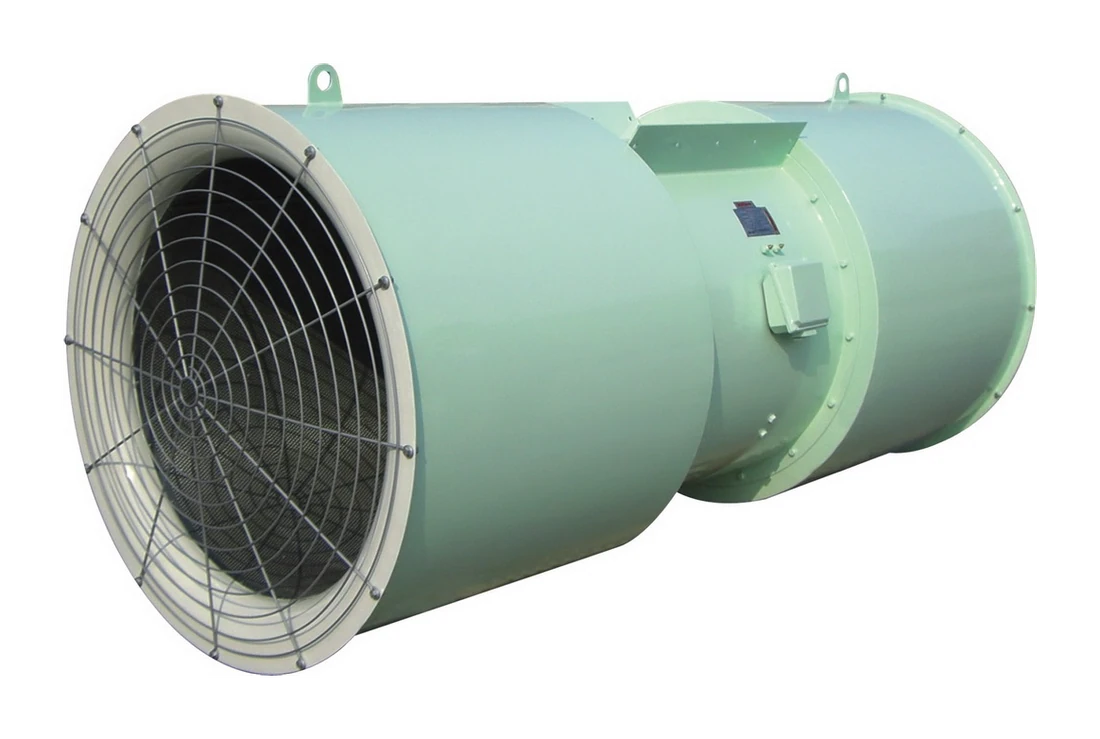
Reversing a motor is not the same as specifying a tunnel fan for a planned reverse-flow duty. An SDS(R) bidirectional jet fan supplier should receive the required performance in both directions, the tunnel installation constraints and the operating sequence. TWOSUN offers SDS(R) bidirectional and SDS tunnel jet fans, alongside DTF axial fans and associated silencers. For tunnel contractors and infrastructure buyers, the first decision is whether the project needs a genuinely bidirectional jet configuration or a primarily unidirectional unit with a different reverse-performance capability.
Two directions require two defined duties. Record forward and reverse thrust, the relevant air condition, acoustic requirements and the complete supplied arrangement. A single motor rating cannot answer those questions.
Tell the SDS(R) bidirectional jet fan supplier what reverse operation must achieve
The TWOSUN metro catalogue distinguishes SDS unidirectional jet fans from SDS(R) reversible bidirectional fans. It describes substantially different reverse-performance behaviour for the unidirectional arrangement and a bidirectional configuration intended to provide corresponding performance in both directions. Treat that distinction as a reason to specify the required duty precisely. Obtain the actual selected unit’s forward and reverse performance records rather than assigning one catalogue statement to every possible assembly.
SDS reverse rotation should not be substituted for an SDS(R) duty
A procurement schedule that says only reversible may be interpreted too loosely. State whether reverse operation is an occasional contingency or a defined design condition with its own required thrust and duration. If the system needs both directions to perform comparable work, make that requirement visible in the equipment schedule and acceptance criteria. The proposed designation, impeller arrangement and motor should then be assessed as a complete answer to it.
For example, a tunnel project may call for airflow direction to change between defined operating modes. The equipment buyer should not decide that a lower-cost unidirectional unit is acceptable simply because its motor can turn the other way. The designer’s required reverse contribution must remain in the comparison. Conversely, a project that only needs a defined forward duty should not acquire a more complex specification without understanding what the additional capability is intended to achieve.
TWOSUN’s company-supplied literature describes SDS/SDS(R) jet-fan diameters from 630 to 1600 mm and a range maximum thrust up to 3500 N. These figures describe the literature’s series envelope, not the duty of every unit. A selected size, blade setting, motor and silencer arrangement must be identified before those numbers become useful for a purchase decision. Do not combine a maximum diameter with a maximum thrust as though they were an approved project selection.
SDS(R) jet-fan thrust needs a tunnel installation context
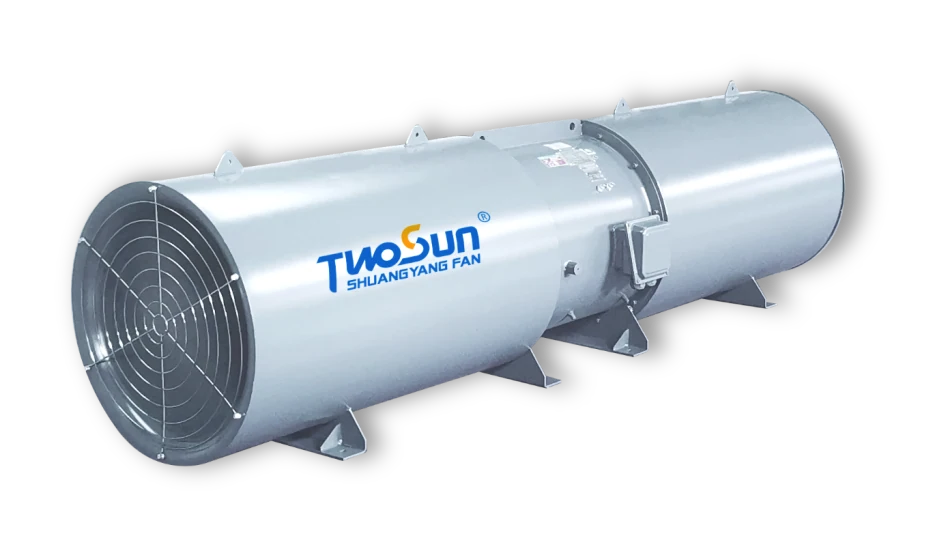
A jet fan transfers momentum into the surrounding tunnel air; it is not selected in the same way as a fan working against a conventional connected duct system. The project ventilation design determines the required installed contribution and how units are arranged. A catalogue thrust figure helps evaluate a candidate, but it does not by itself determine the number of units needed or prove the performance of the completed tunnel.
Keep SDS(R) thrust units separate from DTF duct pressure
Thrust expressed in newtons and pressure expressed in pascals describe different quantities. TWOSUN’s DTF metro axial fans provide another genuine tunnel ventilation route, but their duct-connected operating points should not be compared directly with an SDS(R) thrust value. Identify the intended system role before comparing fan families. A fan that is suitable for one part of the project cannot be moved to another role simply because both products serve tunnels.
The installation drawing should show the proposed location relative to the tunnel ceiling, walls and nearby equipment. Structural elements, signs, services and other obstructions can affect the usable air path. The ventilation designer should assess the installed arrangement and any relevant installation losses. The supplier then needs enough geometry to review the proposed fan package rather than pricing an unidentified suspended cylinder.
Consider a refurbishment in which new services occupy space close to an existing jet-fan position. Replacing the fan with the same nominal thrust does not resolve whether the revised surroundings allow the intended contribution. The project team should revisit the location and assembly envelope before ordering. Moving a bracket or shortening an accessory may appear convenient mechanically while changing the ventilation or acoustic proposal.
For a new tunnel, the same coordination should happen before support positions are fixed. Give the designer and supplier the proposed fan reference, complete length and connection or mounting details. If a change in fan size or silencer length is being considered, check the effect on the coordinated layout. The purchase order should refer to the accepted arrangement rather than leaving the installed envelope open until dispatch.
The SDS(R) silencer arrangement belongs in the performance submission
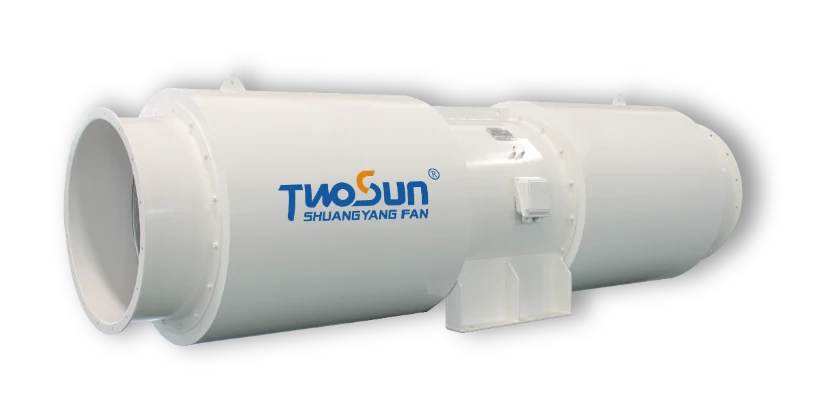
The TWOSUN catalogue describes silencers at both ends of the jet-fan assembly and discusses nominal silencer lengths related to fan diameter. In the described arrangement, 1D and 2D mean lengths corresponding to one or two fan diameters. These are construction options to review, not interchangeable accessories that can be changed without checking the complete proposal. Confirm the actual length, acoustic evidence and performance basis for the supplied assembly.
Longer SDS(R) silencers change more than the acoustic description
A longer silencer changes the installed envelope and handling requirements. It can also affect how the fan package fits between tunnel services and how technicians reach the assembly. Ask for the complete general arrangement with the chosen silencers installed, including the mounting reference. An acoustic requirement should not be accepted against one configuration while the delivery drawing shows another merely to save space.
Specify the sound quantity and assessment conditions required by the project. A sound-power result, a sound-pressure reading at a stated distance and a general low-noise description are different kinds of information. Request the appropriate data in the form the acoustic designer can use. Where forward and reverse operation both matter, establish whether the submitted acoustic evidence addresses the required conditions in both directions.
TWOSUN also lists ventilation silencers and control cabinets within its wider portfolio. That supports a discussion about coordinated system components. It does not mean that a building-ventilation silencer can replace the selected SDS(R) end silencer. Maintain the association between the jet-fan reference, its agreed accessories and the performance evidence submitted for that combination.
Write the SDS(R) direction-change sequence before buying the controls
The fan and control package must agree on how a direction change is commanded and confirmed. State the normal operating modes, stop condition, required feedback and permitted restart sequence. The supplier should confirm what the selected fan and motor allow, while the project’s controls and ventilation designers establish the overall logic. Do not infer that reversing electrical connections is an acceptable operating procedure for a rotating fan.
The historical TWOSUN catalogue discusses rapid direction changes for the described jet-fan range. Use that as a subject for a current technical confirmation, not as a universal switching-time guarantee. Ask for the permitted sequence and any timing limitations for the selected motor, drive and fan assembly. A contractual changeover requirement should be explicit in the approved submission and supported by the agreed evidence.
In a two-direction system, feedback naming deserves particular care. A running indication should identify what is actually confirmed, and the project documents should distinguish forward operation, reverse operation, stopped status and fault. The cabinet supplier and site installer need consistent terminal and signal references. A generic fan-running contact can be insufficient if the system assumes it confirms the commanded direction.
Emergency temperature duty must also remain a separate requirement. If SDS(R) equipment is part of an emergency smoke-control system, define the specified temperature, duration and applicable acceptance route. TWOSUN’s catalogue contains historical high-temperature information, but current model-specific documents are needed for the order. Neither bidirectional operation nor a successful ambient performance test establishes the required emergency qualification.
Assess the SDS(R) bidirectional jet fan supplier against the complete assembly
A simple geometric example helps the installation team interpret the SDS(R) silencer options. For a nominal 630 mm fan diameter, a 1D length corresponds geometrically to 630 mm and a 2D length to 1260 mm. That calculation describes the length convention only; it is not the complete assembly dimension or an acoustic performance promise. Use the approved drawing for the actual installed package and its mounting positions.
The distinction matters when a tunnel support location was reserved around a shorter assembly. Selecting longer end silencers should trigger a new envelope check, including the relationship to nearby services and the available maintenance route. The ventilation and acoustic teams should also confirm the performance submission still describes the chosen configuration. A longer component should not enter the order as an undocumented site preference.
The SDS(R) mounting bracket needs a coordinated structural interface. Ask for the relevant equipment and load information, then have the responsible project designer confirm the support and fixing arrangement. A bracket supplied with the fan does not by itself establish the suitability of the tunnel structure or installed anchors. The equipment drawing and structural design should meet at a clearly identified interface.
For a replacement jet fan, survey the existing supports rather than assuming they suit a new SDS(R) assembly with similar thrust. Differences in length, mass, mounting locations or accessories can matter to the fit. Preserve the old installation information as evidence, but compare it with the new approved general arrangement. This is a separate decision from whether the new fan meets the required forward and reverse performance.
The operating team also needs a way to associate each suspended SDS(R) unit with its control reference. Where several units share a tunnel zone, equipment identification should remain visible in the installation and operating documents. A direction test or fault report is more useful when it identifies the actual fan and commanded mode. The agreed naming should connect the physical unit, cabinet signals and acceptance record.
The TWOSUN jet-fan literature identifies the impeller, motor, casing, silencers and mounting bracket as parts of the assembly. The approved equipment record should make each relevant part identifiable. Confirm the selected construction and any project-specific material or finish requirements rather than assuming that all units in the range share one arrangement. The delivered package should correspond to the drawing used for the tunnel coordination.
TWOSUN’s verification overview describes balancing, aerodynamic measurement and production inspection capability. For SDS(R), agree the required forward and reverse performance records and their test basis. If thrust and sound are contractual acceptance quantities, make those requirements clear before production. A general statement that a fan has been tested is less useful than records tied to the identified assembly and agreed conditions.
The official AMCA directory for Zhejiang Shuangyang lists a specific SDS(R) jet-fan entry. Confirm the selected model and relevant catalogue against that listing where certified ratings are required. Do not extend one listed entry to every size, historical product photograph or proposed accessory combination. The directory is a verification route, not permission to dispense with model matching.
Mounting and transport require equally specific information. Agree the relevant support details and handling points for the complete jet-fan package, and have the responsible project designer check the installation. If silencers or other parts are shipped separately, identify the pieces and provide the agreed assembly information. TWOSUN shows wooden export packing and shipment coordination, but the order should establish how this particular long assembly will be protected and received.
The practical release decision is whether both airflow directions have survived every revision. Compare the final performance submission, silencer drawing, control sequence and tunnel location against the same equipment reference. If a change improves forward operation while weakening the required reverse duty, resolve it before the order is released. A bidirectional jet fan earns its place in the tunnel by meeting the specified two-way task as a complete installed package.
For the duct-connected part of a metro package, review DTF Metro Axial Fan Manufacturer Decisions at the Ventilation Interface.
