
Blog
Inside an Industrial Fan Factory Review: From Cut Sheet to Tested Assembly

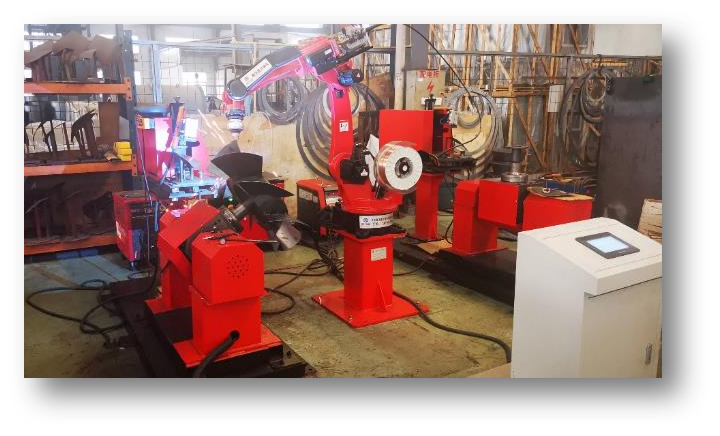
The useful question during an industrial fan factory review is not how many machines appear in a photograph. It is whether the proposed fan can be traced from an approved drawing through fabrication, assembly and the agreed checks. A contractor assessing TWOSUN can start with its manufacturing and testing information, then connect that evidence to a real product: a 4-72 centrifugal ventilator, a DTF axial assembly or an HTFC-III cabinet fan. Each creates different inspection questions. Before requesting a remote tour or document package, identify the exact fan family, intended duty and drawing revision you want the factory to discuss.
This is an evaluation method for purchasers and engineers, rather than a report of a witnessed factory inspection. TWOSUN publishes photographs and descriptions of its production and laboratory capabilities. Current records, order-specific results and any witnessing arrangements need separate agreement for the equipment being purchased.
Follow the industrial fan factory drawing through cutting, forming and joining
TWOSUN identifies laser cutting, CNC bending, hydraulic forming and robotic welding among its manufacturing capabilities. A useful review follows a component through those stages. For a 4-72 centrifugal housing, ask which dimensions locate the inlet, outlet and mounting points, and how the finished assembly is checked against the approved drawing. The purpose is to understand control of the supplied geometry, not to infer a tolerance from the equipment brand.
A 4-72 casing needs more than an attractive weld photograph
The casing must connect to the project’s air path and support the selected arrangement. Ask to see the connection dimensions, discharge orientation and relevant supports on one controlled drawing. If the customer’s duct drawing changes, establish how that revision reaches fabrication. An orderly drawing process can prevent a correctly made casing being delivered to an outdated interface.
For a contractor replacing a fan in a congested plant room, the delivery opening may be smaller than the final assembled envelope. That is a real manufacturing discussion: can the proposed arrangement be transported and installed as drawn, and are any separate supplied components identified? Do not assume the casing can be split or reassembled at site merely because a shipping route is difficult. Any such arrangement needs manufacturer confirmation. Where the retained interface calls for a change, the custom fan interface brief helps separate fixed constraints from proposals requiring review.
Protective finishing should be reviewed at the same level of detail. TWOSUN describes material selection and anti-oxidation powder coating, but the presence of a coating process does not establish compatibility with every process gas. For the 4-72 casing, state whether exposure is internal, external or both. For a DTF assembly in a damp ventilation route, describe the installed environment and request the proposed surface treatment in the technical offer.
If an inspection includes a coating check, identify the agreed specification and the areas to be examined. Avoid importing a thickness or corrosion-test requirement from another manufacturer’s catalogue without a project reason. The factory should be able to explain what has been proposed and how it will be checked; the purchaser should be able to explain why that requirement belongs to the application.
DTF axial housings require a clear mounting and connection reference
TWOSUN shows several DTF arrangements, including vertical and flare-related configurations. The metro and tunnel range helps identify the family under discussion. During the factory review, connect that family to the specified mounting direction, flange interfaces and support arrangement. A horizontal assembly photograph does not establish the details of a vertical installation.
If the project includes a flexible connection or silencer, show it on the installation drawing. Ask which party provides the mating components and whether the manufacturer’s selected assembly includes them. This discussion avoids a gap between a fan that is complete within the factory’s scope and a fan installation that remains incomplete at site.
Inspection of fabricated parts should also distinguish appearance from function. For a centrifugal housing, an even coating does not establish the inlet geometry or the motor alignment. For a DTF housing, a correct flange diameter does not establish every bolt-hole position or the assembled length. Select the dimensions that affect the actual installation, and agree how they will be recorded before they become difficult to inspect after packing.
A fan factory review should make the rotating assembly identifiable
TWOSUN presents balancing equipment and rotating-component inspection as part of its testing capability. Those images are relevant to both axial and centrifugal purchases. The next question is what is being balanced or measured, at what production stage, and how the record relates to the equipment identifier. A general balancing capability should not be reported as the acceptance result for an order that has not yet been tested.
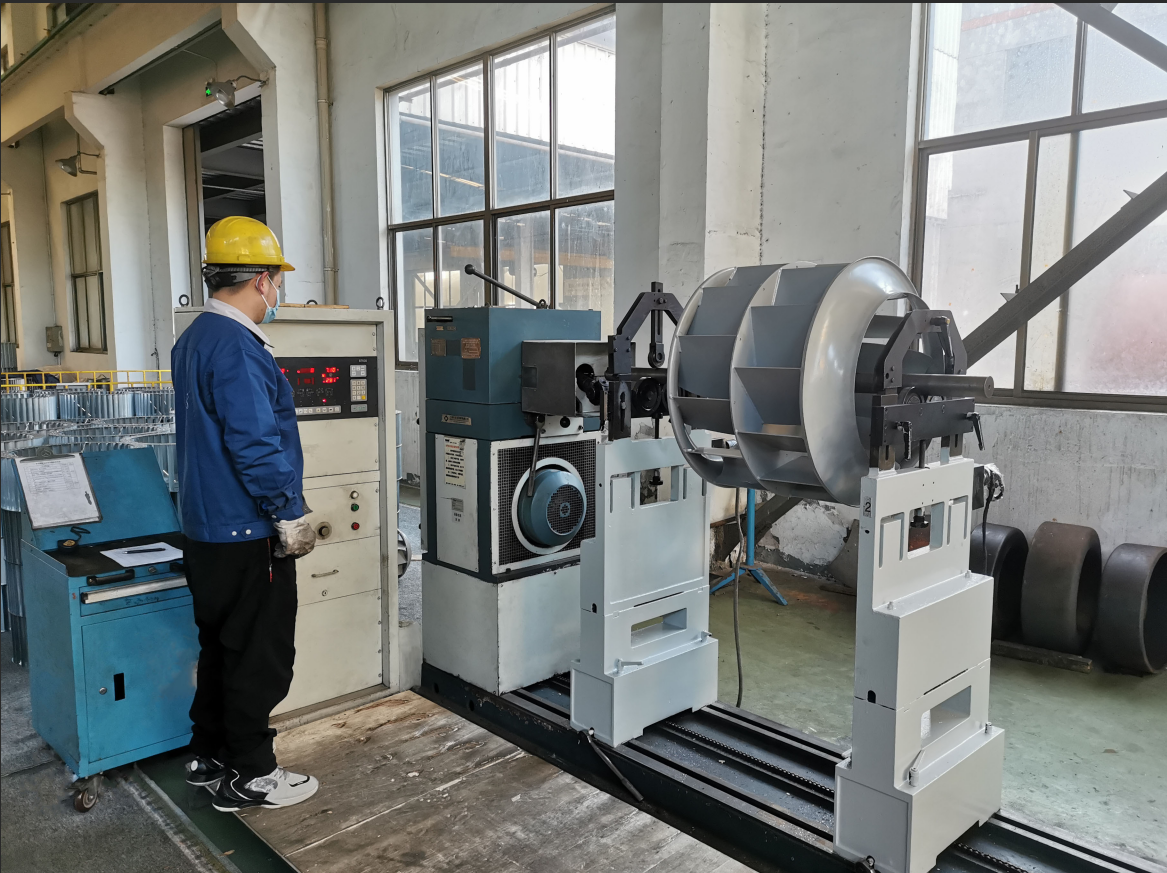
Balance records for DTF and centrifugal impellers should describe their scope
Ask whether a proposed record concerns an individual impeller, a rotor assembly or the complete operating unit. Those descriptions are not interchangeable. If a specification requires an agreed balance or vibration acceptance criterion, write the criterion and measurement conditions into the inspection scope. Avoid assigning a balance grade from a competitor’s catalogue to a TWOSUN fan.
A buyer may also need to know what happens after balancing. If further assembly or shipment preparation affects the rotating system, clarify what final mechanical checks are included. For a project with witnessing requirements, identify the stage that must remain accessible before the equipment is closed or packed. This is more useful than asking for every available workshop photograph.
For a centrifugal assembly supplied with a separate drive arrangement, include the relevant alignment and guarding questions in the agreed review. For a direct-coupled axial assembly, ask how the finished rotating configuration is identified. These are different inspection conversations even when both orders include balancing. The required evidence should follow the construction actually offered, rather than a generic inspection list copied between the two fans.
HTFC-III cabinet access belongs in the assembly review
TWOSUN lists HTFC-III as a backward centrifugal cabinet range. The enclosure creates a practical inspection question: can the relevant components be reached in the proposed installed position? Request the selected cabinet drawing with access faces and connection locations. Do not approve service access from the overall length and width alone.
For an MEP contractor installing a cabinet close to a wall, a door that opens at the factory may not open after the ductwork and cable route are fitted. Use the factory review to catch that conflict while the arrangement is still being agreed. The answer may involve a revised position or a different selected configuration; it should not be an unsupported assumption that every cabinet can be supplied in every orientation.
Separate industrial fan performance tests from material and management evidence
TWOSUN’s published testing information covers aerodynamic measurement, balancing, material checks and supporting documentation. These serve different purposes. Ask for a short map between your purchase requirements and the proposed records. A material result does not demonstrate airflow. A performance curve does not establish coating suitability. A management-system certificate does not replace an order-specific inspection record.
Aerodynamic evidence needs an operating point and a test arrangement
The AMCA explanation of fan curves shows why airflow and pressure must be considered together. For a 4-72 or DTF selection, request the curve or performance data for the proposed size and speed. The report should make the pressure basis and air conditions clear enough for the project engineer to compare the result with the required duty. For pressure-intensive centrifugal offers, the 8-09, 9-19 and 9-26 duty comparison explains the information that needs to remain comparable.
Also describe the intended inlet and outlet connections. Laboratory and field arrangements can differ, especially where a duct elbow, guard or damper is close to the fan. Greenheck’s technical discussion of system effects explains the significance of these installation conditions. Treat it as general engineering background; its product ratings and configurations are not TWOSUN specifications.
CNAS and product approval documents should be checked for their covered scope
TWOSUN presents CNAS laboratory documentation and ISO 9001, ISO 14001 and ISO 45001 management-system documents. Ask for current copies and determine what each document covers. If a tender calls for a particular test method or third-party involvement, make that requirement explicit before manufacturing. An accreditation image is not enough to establish every requested test capability.
The same approach applies to specialist equipment. TWOSUN shows nuclear and marine documentation as part of a broader portfolio, while warning that approvals apply within their stated scope. A review of a building cabinet fan should not borrow credibility from an unrelated specialist approval. When AMCA Certified Ratings are specified, association membership alone does not satisfy the requirement; AMCA describes its separate certification process.
Keep historical literature in perspective during the review. An older company manual can help explain a series, but its company figures, certificate images or product descriptions may not be the current purchase basis. Identify the edition being used and request current selection and approval information. Where two documents disagree, resolve the disagreement instead of choosing whichever statement makes the offer look stronger.
Connect factory acceptance of the fan to the equipment that leaves the workshop
Acceptance is useful only if the accepted configuration is the configuration dispatched. For a centrifugal fan, align the equipment tag, motor information, rotation and drawing reference across the inspection record and shipping information. For an HTFC-III cabinet, include the relevant access and connection arrangement. For a DTF assembly with separately shipped accessories, identify the matched items clearly.
TWOSUN shows wooden export packing and describes packing and delivery coordination. Ask how the particular fan will be supported and protected, which items will be packed separately and what needs inspection on arrival. Large projecting connections and separate silencers create different handling questions from a compact cabinet. Packing details, weights and dispatch dates should come from the confirmed order arrangements.
When a distributor receives several similar-looking centrifugal units, clear identification prevents an installation error. The package list should let the receiving team distinguish the approved configurations without unpacking every assembly completely. Agree how loose items and documents will be matched to the correct equipment reference. This is an equipment-identification requirement, not a claim that a standard packing method fits every fan.
Consider the receiving sequence as well. A DTF assembly may arrive before its supports or ductwork are ready, while an HTFC-III cabinet may need to wait for a plant-room access route. Ask for the selected equipment’s storage and handling instructions before dispatch. Confirm who will retain protective covers, inspect for transport damage and preserve the supplied documentation until installation. Storage conditions must follow the manufacturer’s instructions for the actual assembly.
Finish the review with a short list of unresolved decisions rather than a large unstructured photo archive. For each decision, name the affected fan, the drawing or requirement involved, the evidence expected and the point at which it must be resolved. If a DTF mounting interface remains open, keep it visible. If the 4-72 performance selection is accepted, record the accepted revision.
A remote review can be organized around those open decisions. Request a view of the relevant DTF mounting arrangement or the selected HTFC-III access face, rather than a general walk through unrelated equipment. Ask the factory representative to relate the image or document to the drawing being discussed. Record what was demonstrated and what remains a future inspection point. This preserves the difference between a useful capability review and acceptance of the finished order.
A worthwhile factory assessment leaves purchasing with a defined supply scope and engineering with evidence it can use. Take the selected assembly back through the drawing, fabrication, rotating checks, performance information and packing identity. Any break in that chain is a specific question to resolve before the shipment is approved.
