Blog
What a Tunnel Jet Fan Supplier Needs to Know About Thrust and Clearance

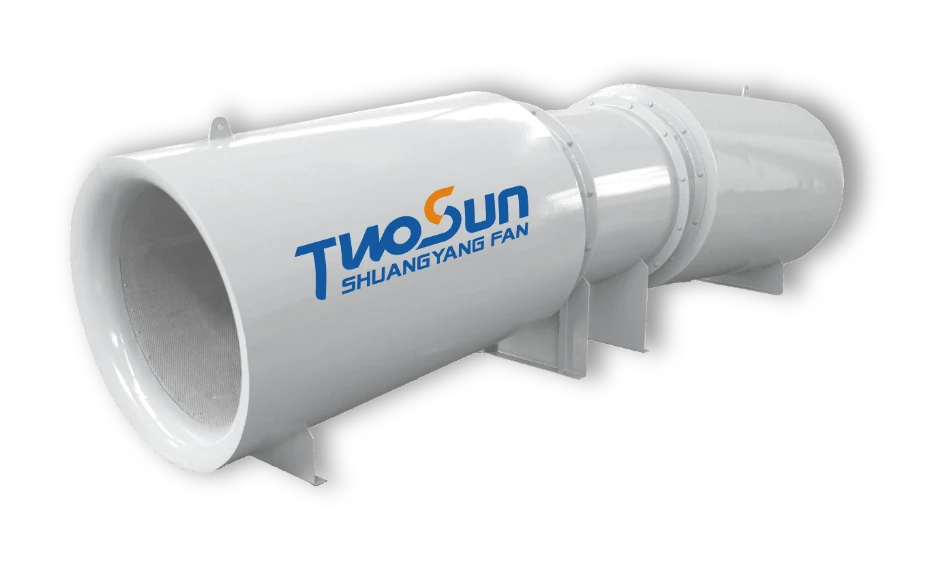
A tunnel jet fan can meet its stated thrust and still be the wrong assembly for the available ceiling space. Before choosing a tunnel jet fan supplier, define the required direction-specific performance and the complete installed envelope. TWOSUN’s tunnel range includes SDS tunnel jet fans, suspended SDS arrangements, reversible SDS configurations and SDS(R) bidirectional equipment. Its tunnel catalogue also shows silencers, mounting brackets and the dimensions associated with different assemblies. Use those actual routes to begin selection, then confirm the proposed model, test arrangement and project clearances together.
The practical conflict is familiar to a tunnel contractor: the ventilation schedule requests thrust, while the coordinated ceiling drawing gives a restricted height between the structural surface and the clearance envelope. Choosing the nominal fan diameter first leaves the silencers, brackets and service access to compete for whatever space remains. Review the whole assembly before freezing its location.
A tunnel jet fan supplier should quote thrust for an identifiable assembly
Jet fans serve a longitudinal air-moving role. Their performance discussion therefore needs thrust as well as the relevant airflow and input data. TWOSUN’s catalogue describes SDS and SDS(R) assemblies with an impeller, motor, casing, silencer and mounting bracket. The offered performance should identify which of those supplied components are included in the stated arrangement.
SDS catalogue range figures do not identify the selected tunnel duty
The TWOSUN tunnel catalogue describes a jet-fan diameter range of 630–1,600 millimetres and a family maximum thrust of up to 3,500 newtons. These describe the scope of the published range, not a combined rating for every assembly. The selected duty requires the particular model, speed and component configuration. Do not assign the range maximum to a smaller unit because the same family name appears on it.
For a purchasing comparison, require each supplier to state the proposed thrust, electrical arrangement, relevant input information and test basis for its selected assembly. Keep any directional conditions visible. An airflow figure and motor rating alone leave an important jet-fan requirement unanswered. The published scope of AMCA Standard 250 identifies thrust among the characteristics considered for jet-fan performance.
The catalogue’s construction section describes airfoil-shaped blades and an aluminium-alloy impeller construction. Use that information to focus the selected equipment review, then ask for confirmation of the current offered materials and configuration. A published construction description should not be converted into a claim that every order has undergone every historical inspection mentioned in the literature. The required material and mechanical records should be identified in the agreed submission.
Bare, 1D-silencer and 2D-silencer descriptions need consistent labels
TWOSUN’s catalogue presents information for assemblies without silencers and with different silencer arrangements. Its construction discussion describes silencer lengths in relation to fan diameter, including 1D and 2D options. Those descriptions matter to both the performance comparison and the overall length. Confirm which arrangement is included in the proposed SDS or SDS(R) offer.
Do not take a performance entry from one arrangement and a dimensional outline from another. The supplier’s submission should make the correspondence clear. If the acoustic requirement causes the silencer arrangement to change, review the submitted performance, length and mounting information again. A silencer choice is part of the selected assembly, not merely a cosmetic attachment.
The original silencer discussion describes a lined construction with a perforated internal surface. Confirm the current selected construction where moisture, cleaning or other tunnel conditions could affect the component. The acoustic and maintenance requirements should address the actual environment. Do not assume a silencer can be cleaned, modified or shortened at site without the supplier’s corresponding instructions and review of the effect on its function.
Review the SDS installed envelope before fixing the tunnel mounting point
The nominal diameter is only one dimension. The installed envelope also includes the casing, silencers, mounting brackets and any specified accessories. TWOSUN’s tunnel literature provides dimensional drawings for its jet configurations. Request the drawing for the actual offered unit and compare it with the coordinated tunnel section, including nearby services and the project clearance boundary.
Suspended SDS brackets must be included in the ceiling-height comparison
TWOSUN shows suspended jet-fan configurations in its portfolio. For the selected suspended arrangement, identify the bracket geometry and the structural interface on the submitted drawing. Do not infer the total installed drop from the impeller diameter. The supporting designer must assess the anchorage and loads for the actual assembly and project conditions.
A contractor replacing existing jet fans faces an additional constraint: the old mounting locations already exist. Measure and submit those interfaces, then request confirmation of the proposed replacement arrangement. A similar overall shape is not proof that brackets, bolt positions or structural requirements match. Keep any required support change visible before the replacement is ordered.
The SDS construction information also discusses protective finishing of the casing and brackets. State the tunnel’s environmental exposure and request the finishing proposed for the selected assembly. A surface-treatment description does not establish a universal corrosion life. If the project requires a particular finish or evidence, specify it before approval and retain it with the relevant casing and mounting items rather than only in a general project note.
The SDS silencer length affects nearby tunnel services
A longer silencer arrangement can conflict with cable trays, lighting, signs or another piece of equipment even when the fan body fits the available height. Show the full longitudinal envelope, not only a cross-section through the impeller. The supplier and project designers need a coordinated view of the assembly’s position.
For a new tunnel, this review can take place while the service layout remains adjustable. For a renewal project, many of those interfaces may be fixed. State which constraints can move and which cannot. The manufacturer can then review an actual selection problem rather than being asked to make an unspecified assembly fit after delivery.
Forward and reverse jet-fan performance need separate project definitions
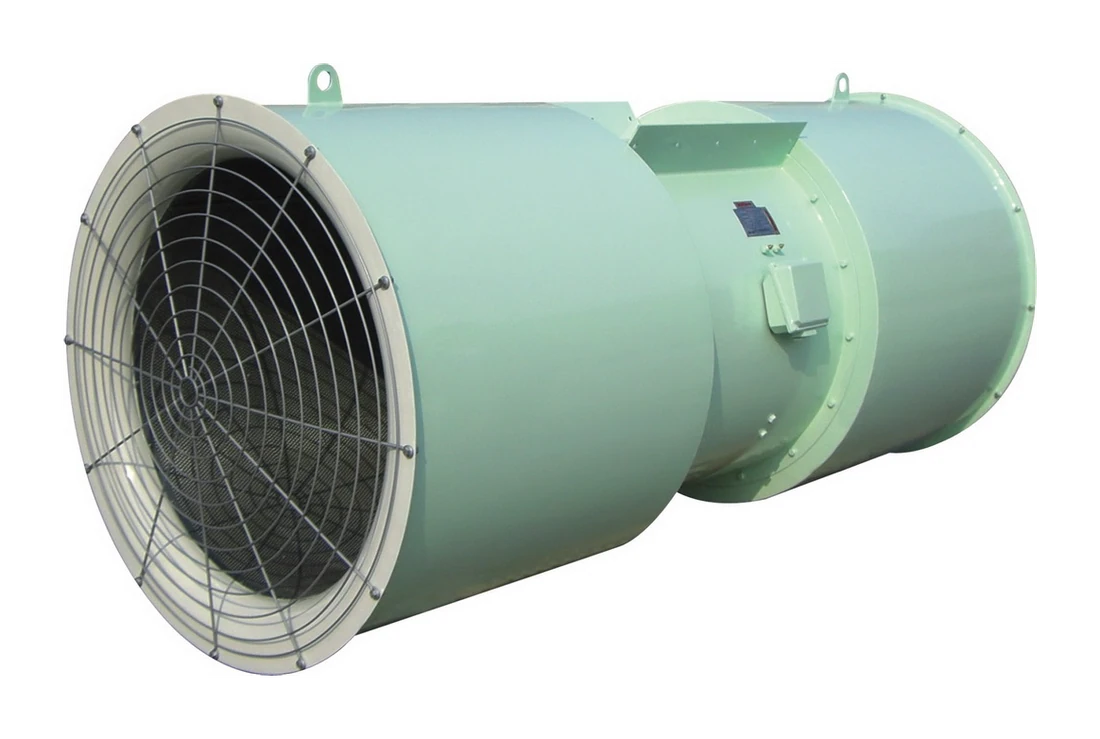
TWOSUN distinguishes SDS directional and SDS(R) reversible or bidirectional configurations in its original literature. A request for reverse operation should specify the required performance in each direction. The ability to reverse rotation is not, by itself, a statement that an arbitrary assembly delivers equal thrust both ways. Request the directional data for the selected model.
An SDS(R) offer should preserve both directional entries
Keep the forward and reverse requirements beside the proposed assembly in the equipment schedule. Identify how the directions relate to the project coordinate system. If the tunnel designer uses chainage or a defined airflow direction, map that reference to the fan drawing and control information. An unlabeled forward arrow can be interpreted differently by separate contractors.
Where the supplier proposes a directional configuration with a different reverse capability, treat that as an explicit engineering exception. Do not let it disappear into a general reversible-fan description. The designer should decide whether the proposal satisfies the intended operating modes, and the accepted directional information should remain in the purchase documents.
The reversal sequence belongs to the selected motor and engineered controls
The supplier should provide the operating instructions applicable to the offered assembly, while the project designer defines the required system sequence. Do not set a reversal timer from a historical catalogue statement or another manufacturer’s manual. The selected motor, drive and control arrangement need to be reviewed together.
For a tunnel operator planning equipment renewal, this may involve more than replacing the fan mechanically. Existing control labels, direction indication and operating commands may need reconciliation with the new equipment documents. Identify those interfaces early so an apparently straightforward replacement does not arrive with an unresolved operating-direction mismatch.
Acoustic requirements should remain tied to the SDS operating condition
The tunnel catalogue’s silencer options make sound an important part of the selection discussion. State the relevant project acoustic requirement and request the available sound information for the selected operating condition. Identify whether the submitted value describes sound power or sound pressure, and retain any distance, test or frequency information needed for the comparison.
Greenheck’s technical introduction to fan sound explains the distinction between source data and received sound. Its own acoustic ratings are not TWOSUN specifications. For the tunnel project, the acoustic assessment should consider the installed position and receiving conditions rather than treating a catalogue number as a universal site guarantee.
When comparing two SDS selections, use equivalent operating and silencer arrangements. A quieter entry at a different speed or thrust does not establish a better solution to the same requirement. The ventilation and acoustic decisions need to describe one accepted assembly, with any tradeoff in length, performance or power made visible to the project team.
Keep laboratory equipment performance separate from the tunnel designer’s assessment of installed effectiveness. Nearby surfaces, the mounting location and the wider longitudinal airflow arrangement belong to the system review. The selected SDS thrust is an input to that work, not a calculation of the complete tunnel air movement by itself. Ask which submitted quantity is being used in the design and preserve its test arrangement and component scope.
Keep jet-fan evidence separate from DTF shaft-fan evidence
TWOSUN also offers DTF axial assemblies for metro and tunnel duties. Those ducted or shaft applications require an airflow-and-pressure selection rather than the same thrust comparison used for a longitudinal jet fan. The guide to tunnel jet and main-fan duties explains the distinction across the package. Do not compare the two equipment roles through nominal airflow alone.
For the selected SDS or SDS(R) unit, agree the performance and mechanical records required by the specification. TWOSUN describes aerodynamic measurement, balancing and inspection in its testing information. Request the applicable scope and evidence for the offered assembly. General laboratory capability or association membership does not establish a model-specific certified rating.
If the project requires emergency smoke operation, state the temperature-time requirement and current approval evidence separately. The original tunnel literature contains historical testing descriptions, but the present purchase needs confirmation of the selected model and covered configuration. Do not transfer an approval from another size or arrangement without the relevant documentation.
Ship the selected jet-fan configuration with the tunnel installation identity intact
Agree how each jet fan, silencer and separately supplied component will be identified against the equipment schedule. For a long tunnel with several similar assemblies, the delivery documents should let the site team match equipment to its approved location and directional requirement. A product-family label alone may not distinguish different selected duties.
TWOSUN shows wooden export packing and discusses delivery coordination. Confirm the actual package dimensions, assembly supports, lifting information and storage instructions for the selected jet fan. A long silenced assembly creates a different handling route from an individual fan body. If components travel separately, obtain the corresponding assembly instructions and matched identification.
For staged tunnel works, request delivery dates against the named installation groups and agreed inspection requirements. Keep site readiness and receiving space visible in that discussion. The catalogue does not establish a standard dispatch time for every jet-fan configuration, nor does it define how a specific tunnel must sequence its installation.
The selected unit is ready for approval when its thrust data, directional performance and complete envelope describe the same assembly. Keep that drawing beside the tunnel clearance section and the operating schedule. A nominal SDS diameter is a useful starting reference; the accepted silenced configuration is what the contractor will actually have to install.
For each suspended SDS location, retain the accepted bracket and silencer arrangement with its tunnel-zone reference so the installation team can identify the configuration that received the clearance review.
