
Blog
T35-11 Axial Flow Fan Manufacturer Advice for Workshop Air Replacement

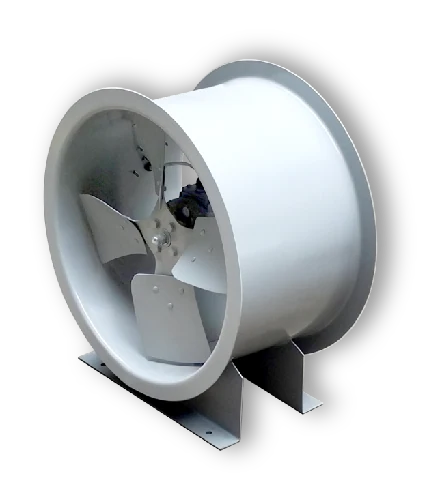
A workshop fan can run normally and still leave the room poorly ventilated after a duct or louvre has been added. Before asking a T35-11 axial flow fan manufacturer for a larger motor, establish what changed in the air path. TWOSUN’s T35-11 axial-flow, DFBZ wall-mounted, SWF mixed-flow, HL3-2A mixed-flow and DWT roof-fan ranges offer different starting points. A maintenance buyer should first decide whether the task remains short-path room ventilation or has become a more restrictive ducted system.
Replacement priority: confirm the air condition, required airflow at system pressure and the real mounting arrangement. An existing wall opening helps define the installation; it does not establish the new fan’s duty.
Ask the T35-11 axial flow fan manufacturer why the old installation changed
The old unit’s history is useful evidence. Record whether ventilation was once satisfactory, whether the room use changed and when the complaint began. A fan that performed adequately before a restrictive weather louvre was installed presents a different problem from one that has always been too small. Give the supplier that sequence, along with the existing equipment reference, instead of treating every complaint as a failed fan.
Describe the source of the ventilation requirement. Ordinary workshop air exchange is different from capturing contaminants at a production hood. TWOSUN’s T35-11 literature describes general ventilation applications; it does not make the ordinary fan a universal process-extraction solution. Where air contains significant dust, sticky material, corrosive constituents or an identified hazardous atmosphere, separate that requirement for a specific assessment.
T35-11’s 60°C literature boundary is a condition to check
The company-supplied building manual describes the ordinary T35-11 route for non-flammable, non-explosive, non-corrosive air with low dust content, at a stated temperature not above 60°C. Establish the actual fan-inlet temperature and medium before using that route. Do not substitute a hotter process duty simply because the fan is installed in a room where people can work comfortably.
For a maintenance team, this can change the replacement decision. A room-exhaust fan may previously have handled ambient air but now receive heat from relocated equipment. The motor’s surrounding temperature and the conveyed air temperature should both be recorded. If the conditions exceed the ordinary series description, ask for a suitable alternative rather than assuming that a higher insulation class or larger motor automatically resolves the complete fan requirement.
Choose the T35-11 mounting arrangement before matching the wall opening
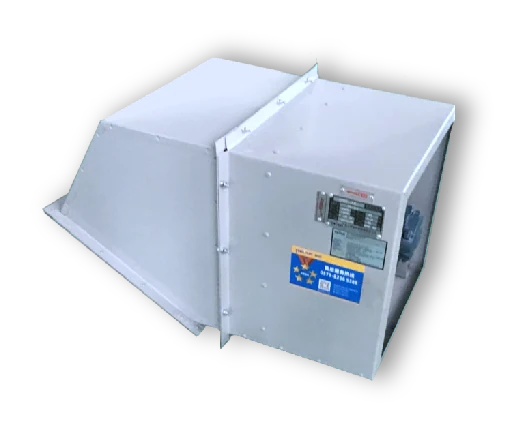
The TWOSUN manual illustrates wall-type and pipe-connected T35-11 arrangements, including different motor positions relative to airflow. This is more useful to a replacement project than a diameter alone. Mark the required airflow direction and the motor side on the existing installation sketch. Then compare the proposed arrangement with the available wall, duct and service clearance.
Wall-mounted T35-11 and DFBZ fans need different opening checks
A round T35-11 assembly and a DFBZ wall-mounted configuration should not be assumed to use the same supporting opening or connection. Measure the actual opening, available fixing surfaces, wall thickness and external clearance. Show any louvre or screen that remains. The supplier can then review a defined arrangement instead of trying to reconstruct the installation from the old fan diameter.
Consider a maintenance contractor replacing several wall fans across a factory. Some openings may include different louvres, weather exposure or internal obstructions even where the old fans carry the same model. Survey each installation type before ordering a single replacement specification. Standardizing equipment is useful only when the shared arrangement still meets the air duty and physical conditions of every location.
Also identify how the fan will be guarded. A wall opening accessible from a work area presents a different access condition from a ducted connection. Confirm the protection supplied with the selected unit and the protection provided by the installation. Product photographs can show representative arrangements, but they should not be treated as a complete schedule of guards, louvres or other accessories included in the order.
A pipe-connected T35-11 needs a resistance calculation
Adding a duct changes the task. The required operating point must include its length, bends and connected components rather than retaining a free-air figure from the previous wall installation. Send the actual route and required pressure to TWOSUN. A fan that moves a useful volume through a short opening may deliver a different volume after the system is extended.
Suppose a workshop exhaust outlet is moved to a more suitable discharge location through a new duct. The environmental reason for the change may be sound, but the existing fan’s suitability must be reviewed. The buyer should not copy the original airflow number into an order without the new pressure requirement. This is the point at which an SWF or HL3-2A mixed-flow discussion may become relevant.
When SWF or HL3-2A deserves comparison with a T35-11 replacement
TWOSUN lists SWF and HL3-2A mixed-flow fans as real building-ventilation options. Where the revised air path is more restrictive, compare their selected operating points and installation requirements with the T35-11 proposal. Do not assume a mixed-flow label guarantees the needed pressure, but do not retain an axial selection solely because its diameter matches the old opening.
The comparison should use the same duty and medium conditions. Ask each proposal to identify the airflow, pressure basis, speed and selected motor. Compare the physical arrangement and service access as well. A suitable mixed-flow candidate can still require a different support or connection detail from the old T35-11 installation, so the mechanical change should be visible before the equipment arrives.
The DWT-I roof-fan route is another option when the project is reconsidering where air leaves the building. It brings a roof installation discussion involving the base, weather interface, receiving access and support design. It is not a simple motor upgrade for a wall opening. Use it where the building design supports that route and the responsible project team has reviewed the roof interface.
The general need to include nearby connections is explained in AMCA’s guidance on installed fan performance. For this replacement decision, the practical action is straightforward: make the proposed fan assessment include the ducts, screens and other components that will actually remain around it.
Read the T35-11 blade and motor details as a complete selection
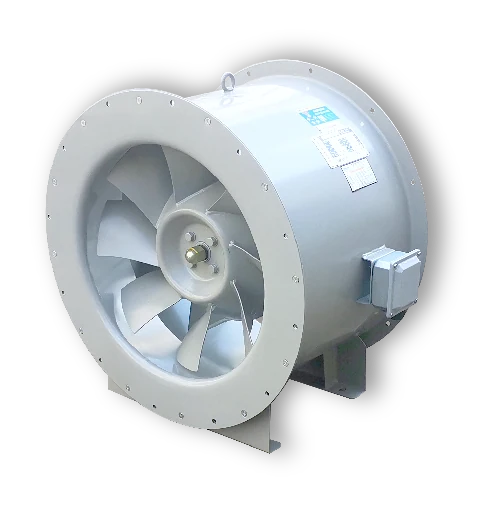
TWOSUN’s manual describes a T35-11 assembly comprising an impeller, casing, inlet collector and motor, with the impeller directly connected to the motor. It also describes multiple sizes and blade-angle options in the family. This explains why a series name is not enough to identify a replacement. Preserve the complete selected reference and the relevant performance information in the order.
T35-11 blade-angle options do not authorize a site adjustment
The manual describes five blade-angle options: 15°, 20°, 25°, 30° and 35°. Those options belong to the defined series selection. They should not be interpreted as permission for a maintenance team to alter blade settings on an installed unit without the manufacturer’s procedure and confirmation of the resulting duty and motor load. The approved replacement should arrive with its selected arrangement clearly identified.
Diameter, speed and blade arrangement can all matter to the delivered performance. When the old nameplate is incomplete, provide clear photographs and measured connections, but explain the missing information. The supplier can then propose a current selection from the required duty. Guessing a blade angle from a photograph or accepting a visually similar fan can leave the actual operating point unresolved.
Electrical details need the same discipline. State the available voltage and frequency and the intended starting or control arrangement. Do not assume an existing cable or starter is suitable for a proposed replacement simply because the fan fits mechanically. Have the responsible electrical team review the selected motor information. Any change in speed control should also be checked against the fan and motor proposal.
A T35-11 replacement visit should inspect the air path as well as the fan
Before inspection or maintenance, follow the site’s approved isolation procedure and prevent unintended restart. The purpose of the visit is to establish the condition of the installation, not to work near a moving impeller. Record visible blockage, damaged guards, loose connections and the condition of accessible components. The manufacturer’s instructions and the site’s responsible personnel should govern the work.
Pay attention to what has accumulated around the wall opening or duct entry. A partially blocked screen or obstructed inlet can be relevant to a ventilation complaint even when the motor runs. Photograph the condition before cleaning or altering the installation so the technical review has a reliable starting point. Avoid assigning a performance loss to the fan alone without looking at the route it serves.
If noise or vibration prompted the replacement, describe when it occurs and whether it changed after ductwork or supports were modified. TWOSUN’s testing overview describes balancing and mechanical inspection capability, but a factory-balanced replacement cannot correct an unsuitable site support or an obstructed inlet. The supplier needs the symptom and installation context to distinguish those issues.
For repeat replacements, retain an equipment reference that connects the location to the approved fan, motor and mounting drawing. Two T35-11 units can look alike while serving different duties or having different arrangements. A clear location-based record helps the next maintenance buyer request the correct item without reducing the requirement to a casing photograph and motor power.
Approve the workshop ventilation result before repeating the order
For a T35-11 installed between two duct sections, preserve the motor-side arrangement in the replacement sketch as well as the airflow arrow. TWOSUN’s manual illustrates more than one pipe-connected layout. The approved selection should identify which arrangement is supplied and where the motor can be reached. This avoids a replacement that has the correct nominal air direction but places the accessible components on the wrong side of a constrained service opening.
The room’s replacement-air route should be reviewed with a wall-mounted T35-11 exhaust proposal. Identify where incoming air is intended to enter and whether those openings remain available during normal production. If doors used during an initial assessment are normally closed, the commissioning condition should reflect that. Otherwise, the replacement may appear satisfactory during installation and disappoint when the workshop returns to its usual operating pattern.
A factory with several wall fans should also consider whether supply and exhaust locations create a useful air path through the occupied zone. A nearby opening can allow air to travel directly to an exhaust without addressing the area where ventilation is required. The responsible building-services team should review the arrangement. The remedy may involve air distribution or opening locations, rather than another increase in the T35-11 size.
Keep those building conditions in the installation record for future replacements. A T35-11 selected for a defined wall opening and air path should not become the automatic spare for a unit serving a longer duct. Record the location and actual mounting arrangement with the approved reference. That gives the maintenance buyer a usable distinction between visually similar fans performing different ventilation tasks.
TWOSUN’s engineering and manufacturing operation supplies several building-fan families, so a replacement programme can begin with a representative installation assessment. Confirm the selected duty and arrangement for that installation before extending the order to apparently similar locations. Where site conditions differ, keep separate equipment lines instead of assuming one fan will serve every opening.
Agree what is included in each T35-11 shipment: the fan assembly, any specified guards, connection items and the relevant documents. For wall installations, protect the mounting surfaces and exposed parts through handling. If existing louvres will be reused, identify them as part of the site arrangement rather than assuming they are supplied with the new fan. This makes the receiving check specific to the actual replacement task.
During the approved commissioning process, assess the installed ventilation against the project requirement, with the normal openings and connected components in their intended condition. Record any departure for review before ordering the remaining units. A first installation that merely runs is not sufficient evidence that the workshop’s changed air path has been addressed.
Keep the final decision tied to the original complaint. If the workshop still has a short, suitable air route, a correctly selected T35-11 may remain the appropriate choice. If the route or air condition has changed, use that evidence to compare DFBZ, SWF, HL3-2A or the relevant roof arrangement. The successful replacement is the one that resolves the room’s real ventilation task, rather than reproducing an old diameter in a new casing.
For a plant-room cabinet alternative to the workshop arrangement, read HTFC-I Cabinet Fan Manufacturer Choices for Space-Limited Plant Rooms.
