
Blog
HTFC-I Cabinet Fan Manufacturer Choices for Space-Limited Plant Rooms

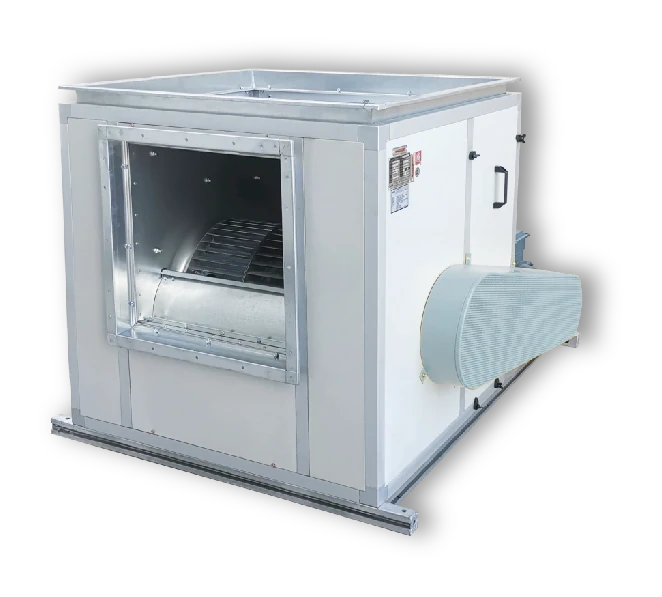
A quiet-looking cabinet can still be the wrong fan for a crowded plant room. The important question for an HTFC-I cabinet fan manufacturer is whether the selected unit can deliver the specified airflow through the actual ducts while leaving room for its motor and service access. TWOSUN’s building ventilation range includes HTFC-I, HTFC-II and HTFC-III cabinet fans, GDF duct fans and HTF axial fans. For building-services contractors and equipment buyers, those alternatives should be compared around the room and operating duty, rather than around cabinet dimensions alone.
A useful first decision: identify whether this is ordinary ventilation, a dual-duty proposal or a specified emergency smoke-exhaust duty. Then define the required airflow and pressure, motor arrangement and maintenance side before the cabinet is fitted into the layout.
An HTFC-I cabinet fan is an airflow assembly inside an enclosure
The enclosure surrounds a centrifugal fan arrangement; it does not replace the need to select an operating point. Airflow must still be paired with the resistance of the connected system. Include the relevant ductwork, terminals, filters, dampers and other components in the stated duty. A cabinet that fits the room but cannot meet that duty is not a completed selection.
HTFC-I internal airflow space matters as well as external dimensions
TWOSUN’s building-fan manual describes the HTFC cabinet construction and the space around the internal fan. For a buyer, the practical implication is to approve the intended arrangement rather than requesting an arbitrary smaller box around the same impeller. Internal clearances and the inlet and outlet path belong to the fan design. Any proposed dimensional change should return to the supplier’s technical review.
The manual also describes an enclosure incorporating sound-insulating construction. That makes the HTFC route relevant where the installation has an acoustic requirement, but it does not establish a guaranteed room noise level. Ask for the sound information applicable to the selected configuration and operating point. The acoustic designer can then assess the complete installation, including ducts and structure, instead of assuming the cabinet eliminates every noise path.
Imagine a contractor locating an extract fan next to regularly occupied rooms. The cabinet may help address the equipment arrangement, yet duct-borne sound and structure-borne vibration still need attention. The proposed fan speed, connection detail and support arrangement should therefore be reviewed together. Reducing the room clearance to make the cabinet fit can also remove space intended for a flexible connector or vibration isolator.
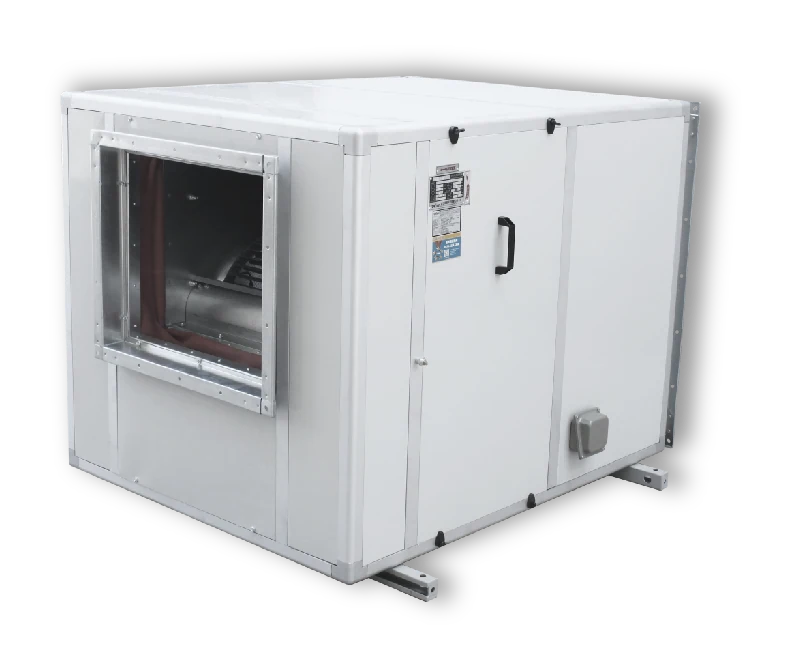
Ask the HTFC-I cabinet fan manufacturer to identify the complete variant
The Roman numeral and the remaining designation should not disappear from the purchase documents. In the company-supplied HTFC explanation, type I is associated with a single-speed forward-curved arrangement, type II with a double-speed forward-curved arrangement, and type III with a backward-curved arrangement. Confirm the complete selected reference and current construction in the proposal; these family descriptions are not interchangeable performance tables.
| TWOSUN route | Difference to clarify | Document that should resolve it |
|---|---|---|
| HTFC-I cabinet fan | The selected single-speed arrangement and duty | Identified fan curve, motor details and general arrangement |
| HTFC-II cabinet fan | The two required operating conditions | Both duties and the agreed electrical/control arrangement |
| HTFC-III cabinet fan | The backward-curved configuration being offered | Its own performance data and installation drawing |
| GDF centrifugal duct fan | A different duct-fan package and access arrangement | Connection dimensions and service-space requirements |
HTFC-I and HTFC-II should not share an incomplete duty schedule
If a building needs two distinct operating modes, ask how the proposed equipment meets both. TWOSUN identifies HTFC-II as a double-speed cabinet range, but the buyer still needs the two selected airflow-pressure conditions and the corresponding motor and control information. Do not assume that the second operating point follows a fixed ratio suitable for the project, or that an HTFC-I quotation includes the same capability.
For a single-speed HTFC-I duty, keep the required operating range visible even if only one design point is specified. The system may change as filters load or balancing dampers are set. Explain those conditions to the selection engineer so the proposal can be reviewed on a meaningful basis. A nominal motor power and a maximum airflow figure are too little information to assess that behaviour.
HTFC motor position separates ordinary ventilation from specialist proposals
The TWOSUN manual distinguishes external-motor and internal-motor cabinet arrangements for different uses. The selected motor position affects the physical installation and the conditions the motor encounters. It should be shown on the general arrangement, together with any agreed guard and access requirements. Do not infer a smoke-exhaust qualification merely from the external position or from the HTFC family name.
Where emergency operation is required, state the temperature-duration requirement and applicable project acceptance route. Obtain records for the exact proposed configuration. A routine ventilation unit and an emergency-duty unit may look similar in a plant-room layout, but their evidence requirements differ. The supplier, building-services designer and accepting authority should be working from the same duty description before the order is fixed.
Design the plant-room route around the HTFC-I maintenance operation
Begin with the service task, not just the installation task. Mark how the relevant access panel opens, how technicians reach the motor and drive, and how a component could be removed later. TWOSUN’s manual describes belt-related components and motor adjustment provisions for relevant HTFC arrangements. Confirm the actual supplied construction before assigning service space, rather than assuming every cabinet fan has the same maintenance envelope.
A replacement project makes this especially important. A new HTFC-I may fit within the old cabinet footprint while its motor access faces a wall or an adjacent pipe. The site team should measure the usable clearance with the surrounding services installed, not from an early architectural plan. Provide photographs and dimensions together so the supplier can distinguish a genuine free opening from an area already occupied by valves or cable trays.
Another common constraint is the route into the room. Establish the doorway, turning space and any lifting limitation before approving the complete assembly. If transport in sections is proposed, confirm which sections are permitted to separate and what reassembly work is required. The equipment submission and packing list should describe that arrangement consistently. A delivery solution that depends on unplanned site dismantling can undermine an otherwise suitable cabinet selection.
Airflow direction should appear on the same drawing. Identify the inlet side, discharge side, duct connection dimensions and the required orientation relative to the service aisle. A convenient outlet direction is not enough if the inlet approach becomes obstructed. Where the plant-room layout forces an abrupt turn near the cabinet, include it in the selection review instead of leaving the supplier to assume a clear connection.
The general relationship between connection geometry and installed performance is discussed in AMCA’s system-effect guidance. For an HTFC-I purchase, the relevant action is to provide the actual inlet and outlet geometry with the duty. This helps keep the proposed performance tied to the room in which the fan will operate.
Compare GDF and HTF when the cabinet route creates a poor installation
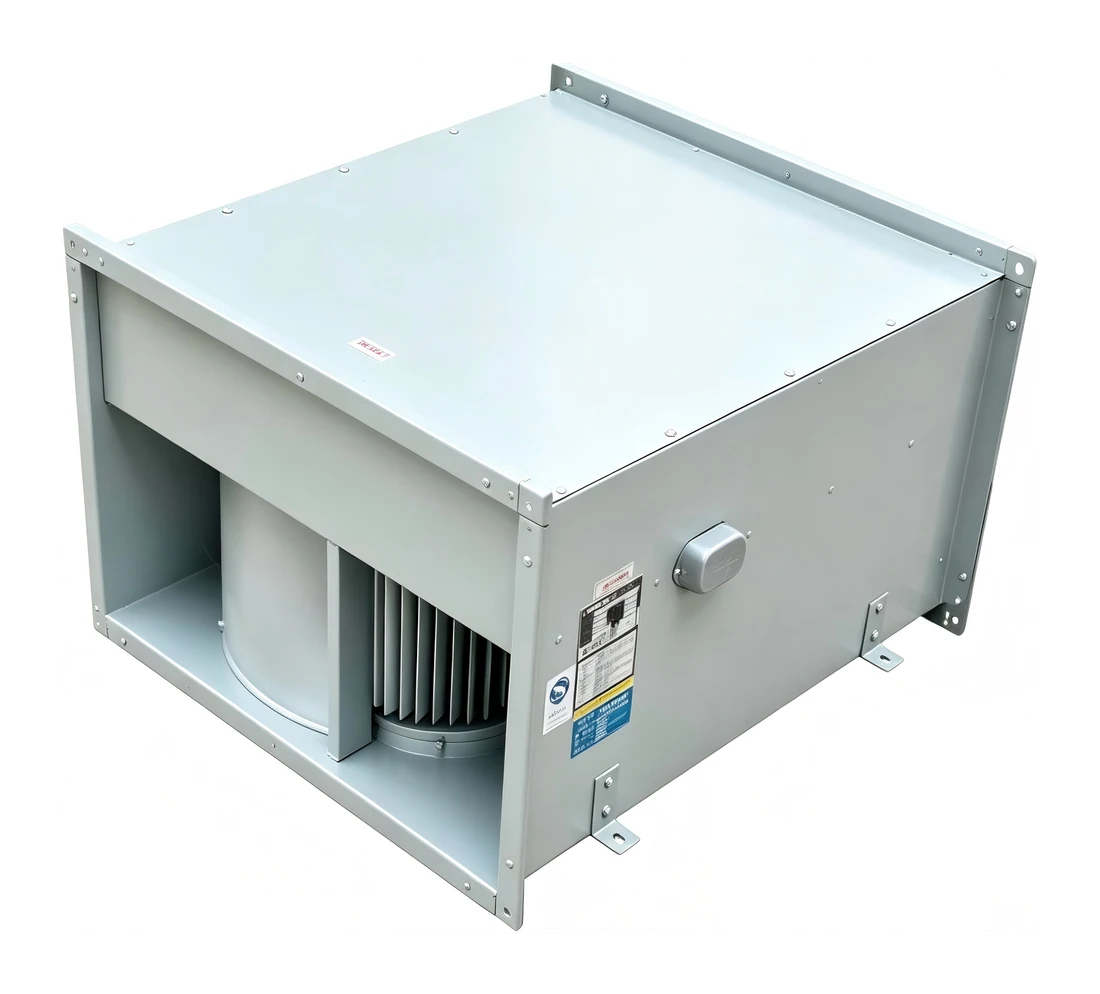
The GDF centrifugal duct fan is another TWOSUN option for a ducted ventilation discussion. It should be evaluated where the installation concept differs from a plant-room cabinet package. Compare its selected performance, connections, support and maintenance access with the actual requirement. Moving a fan into a ceiling zone does not remove the need for an accessible service route.
The HTF axial-flow smoke-exhaust range belongs to a different product route again. Where the system layout and specified duty favour an axial arrangement, it deserves a proper technical comparison. It should not be treated as a direct cabinet substitute based only on airflow. The pressure requirement, installation geometry and any emergency-duty evidence must follow the proposed HTF configuration.
A contractor can therefore use TWOSUN’s range breadth to revisit a difficult installation instead of forcing one cabinet size into every room. One location may suit an HTFC-I package, another may need a different HTFC variant, and a third may require a GDF or HTF assessment. The point is not to multiply product types unnecessarily. It is to identify where a shared specification would create a poor fit or an unresolved duty.
The HTFC-I submission should connect the curve, cabinet and motor
For a belt-equipped HTFC-I arrangement, maintenance access should allow the tasks defined by the manufacturer’s instructions. The manual identifies belt and pulley components, a motor adjustment provision and a guard for relevant constructions. Ask the installation team to demonstrate how the actual selected arrangement can be inspected and serviced after the ducts are connected. An access panel shown in a catalogue is not usable access if another service blocks it.
A pair of cabinets installed side by side can expose this problem. The first unit may have its motor facing the aisle while the second faces the neighbouring cabinet. Do not assume a mirrored layout automatically provides the same service access. Review each selected arrangement and confirm whether a different orientation or spacing is needed before repeating the first equipment line across the plant room.
Enclosure panels also need protection during installation. If a contractor intends to remove a panel to reach a connection, use the manufacturer’s permitted procedure and preserve the panel for correct refitting. Leaving an enclosure incomplete can defeat the arrangement assessed for the selected cabinet fan. The receiving and installation team should know which parts belong to the final assembly, rather than treating removable panels as disposable transport pieces.
Where an HTFC-I is proposed above a service zone rather than on the floor, obtain the selected support and access information before accepting the position. The room drawing should show how the relevant component can be reached and removed without relying on access through unrelated finished ceilings or occupied rooms.
TWOSUN’s production and testing overview shows fabrication, balancing and aerodynamic verification capability. For an HTFC-I order, translate that capability into an agreed submission containing the selected fan reference, speed, motor information, duty point and drawing revision. If the project requires particular inspection records or witnessed testing, agree those requirements before the manufacturing sequence is committed.
The cabinet dimensions and connection positions should match the unit identified by the performance information. Check the motor arrangement and supplied accessories against the same reference. If a quotation includes isolators, flexible connections, guards, dampers or a control cabinet, identify them individually. TWOSUN lists system components in its portfolio, but their inclusion in a particular HTFC-I order must be explicit.
Where certified ratings are required, use model-specific evidence. The AMCA directory for Zhejiang Shuangyang lists particular HTFC series and models. Match the offered equipment and catalogue to the requirement instead of treating a company membership record as certification of every cabinet fan. This protects the buyer from accepting evidence that belongs to a different configuration.
For a cabinet fan, receiving checks should include enclosure condition and the agreed access arrangement as well as visible transport damage. Confirm that removable panels, supplied components and identification correspond to the approved submission. Where the assembly has been shipped in sections, verify the parts before installation begins. A missing bracket or connector is easier to resolve while the packing is open than after the fan has been enclosed by completed ductwork.
TWOSUN’s published delivery process includes wooden export packing and shipment coordination. Agree how the selected HTFC-I enclosure, motor and any separately packed accessories will be protected and handled. State the receiving route and storage conditions, and obtain the relevant dimensions and handling information before dispatch. Do not let a general export-packing description substitute for the arrangements needed by a large cabinet entering a restricted plant room.
The order is ready when the equipment buyer can point to one agreed operating duty, one complete variant and one maintainable layout. Have the installation team demonstrate the future panel and motor access on that drawing. If they cannot, change the arrangement while the cabinet is still being specified. That decision is more valuable than accepting a compact footprint that becomes difficult to operate or service after the room is finished.
If the replacement is a workshop wall or short-duct fan rather than a cabinet unit, examine T35-11 Axial Flow Fan Manufacturer Advice for Workshop Air Replacement.
