
Blog
4-72 Centrifugal Fan Manufacturer: Match the Duty Before the Order

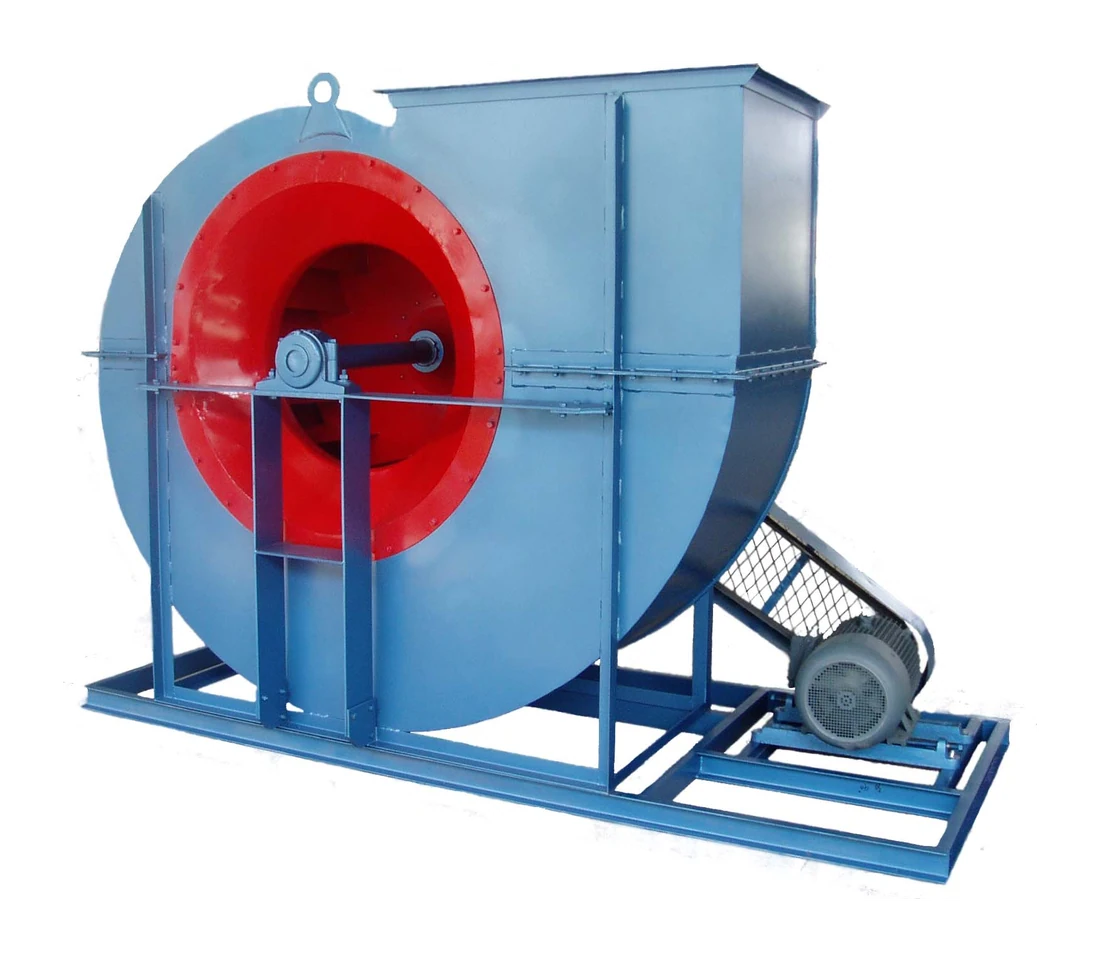
A 4-72 centrifugal fan manufacturer should first establish whether your job is ordinary ventilation, process exhaust or a genuinely demanding pressure duty. For a factory buyer or ventilation contractor, the useful starting point is the required airflow at the required pressure, followed by the gas condition and installation drawing. TWOSUN offers the 4-72 centrifugal ventilator alongside the 4-79, 6-48 and high-pressure centrifugal families. That breadth helps you compare the proposed fan with alternatives before approving a motor or a purchase order.
Start here: use 4-72 as a candidate for general factory or building ventilation; separate dusty extraction, hazardous gases and hot processes for a specific technical review. A familiar casing shape does not establish suitability for all four jobs.
What a 4-72 centrifugal fan manufacturer needs from your ventilation duty
Airflow and pressure belong together. A requirement expressed only as cubic metres per hour can produce a proposal that moves the right volume in a test arrangement but cannot overcome the resistance of your installed ductwork. State whether the pressure requirement is static or total, identify the point where it applies and describe the accessories included in the calculation. The quotation can then describe a defined operating point rather than an impressive maximum.
Keep the 4-72 gas condition inside the stated selection boundary
The TWOSUN industrial manual describes 4-72 for general factory and large-building ventilation, with a stated gas-temperature limit of 80°C and a dust or hard-particle concentration limit of 150 mg/m³. These are boundaries from the literature, not a promise that every gas below those figures is suitable. The medium description still matters: identify moisture, corrosion, sticky material and any hazardous constituents before treating the application as ordinary air handling.
A workshop exhaust system may collect relatively clean room air, while a nearby production hood captures abrasive dust. They can share the same building and even the same nominal airflow, yet they should not automatically share a fan specification. For the first duty, a 4-72 assessment is a sensible starting route. For the second, discuss the 6-48-10D dust-exhaust configuration and the actual material passing through the impeller. Dust-exhaust naming still requires a medium assessment; it does not authorize combustible-dust service.
Use the actual 4-72 inlet temperature when reading performance
Separate the temperature of the room containing the motor from the temperature of the air entering the fan. A unit installed in a cool plant room may handle warmer air from a process. Give both conditions to the selection engineer, together with elevation where relevant, so the performance basis can be reviewed. Do not use a catalogue pressure without checking the density conditions attached to it, and do not treat an acceptable casing temperature as evidence of a suitable motor environment.
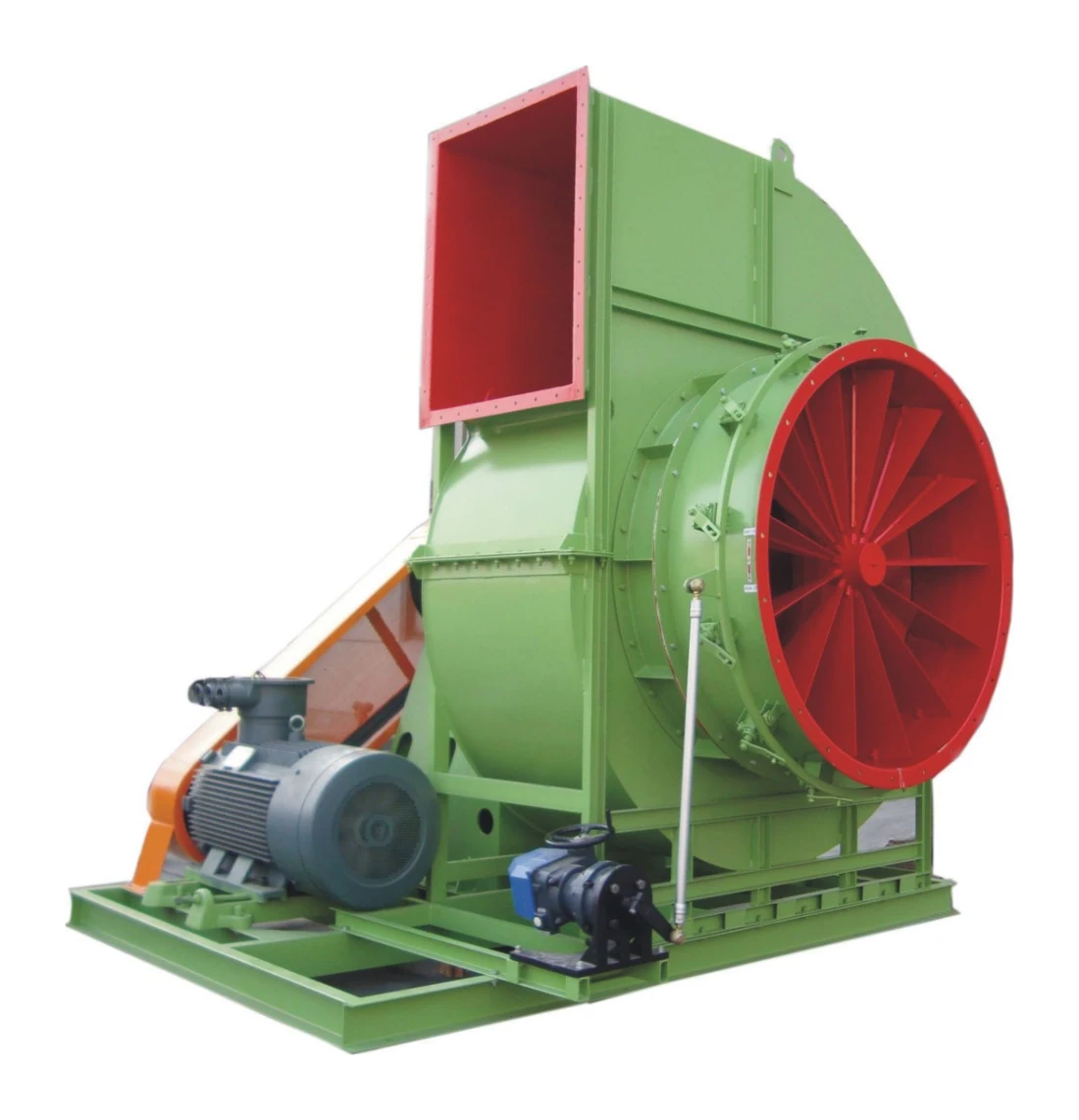
4-72 centrifugal fan selection becomes clearer beside the neighbouring series
TWOSUN’s industrial range includes several families that deserve different questions. A buyer does not need to collect a quotation for every family. The purpose of comparing them is to remove a wrong route early, before drawings and inspection documents are prepared around an unsuitable unit.
| Your unresolved requirement | Family to examine | Decision that still needs evidence |
|---|---|---|
| General factory or building ventilation | 4-72 and 4-79 | Duty point, medium limits and installation arrangement |
| Dust-laden extraction | 6-48-10D | Particle properties, loading and permitted construction |
| Concentrated pressure demand | 9-26 | Required pressure at the specified airflow |
| Elevated process temperature | D-type high-temperature fan | Continuous conditions and the complete thermal design |
The 4-79 is another genuine industrial centrifugal option in the TWOSUN portfolio. It deserves comparison where the project is still within a general ventilation brief, especially when the preferred arrangement or available operating point differs. Neither the shared centrifugal principle nor a similar outlet shape proves that a 4-79 is a dimensionally interchangeable replacement for a 4-72. Compare the selected drawings and curves, not just the series descriptions.
The 9-26 high-pressure fan belongs in a different discussion when the system needs greater pressure at its actual operating flow. Ordering a pressure-oriented family merely because it sounds stronger can complicate control and energy use. Equally, keeping a 4-72 after the process has added resistance can leave the extraction duty unresolved. The system requirement should decide whether that family change is justified.
A D-type hot-gas requirement is different from an 80°C ventilation brief
TWOSUN also presents a D-type high-temperature configuration. If your application approaches or exceeds the ordinary 4-72 temperature boundary, move the discussion to that specialist route rather than requesting a larger ordinary ventilation fan. Temperature affects more than the impeller: the shaft, bearings, motor location, clearances and connected ductwork all need consideration. Confirm the selected assembly’s operating limit and duty duration explicitly; do not borrow a temperature rating from another series.
The 4-72 installation drawing can reveal a costly mismatch before fabrication
For a new project, the fan and the ductwork should develop together. For a replacement, the existing opening often becomes an accidental constraint: the buyer tries to fit a new machine to the old outlet and assumes the rest will follow. Give TWOSUN a dimensioned plan showing the inlet approach, outlet route, base level and maintenance access. Photographs help explain the location but cannot replace dimensions needed for fabrication.
Consider a contractor replacing a workshop exhaust unit during a short shutdown. The old fan may have a satisfactory flow history, but its nameplate does not describe the new filter, altered duct elbow or changed outlet orientation. Sending only the old motor power risks repeating an incomplete selection. Record what changed in the system, then ask for a replacement proposal that addresses both the operating duty and the physical connections.
State the 4-72 rotation and outlet direction from a defined viewing position
Rotation descriptions need a viewing convention. Mark the motor side and indicate airflow direction on the drawing, rather than relying on an isolated word such as left or right. Show the outlet angle relative to the installed base and identify whether any site change would require a different casing arrangement. A supplier can then check the proposed configuration against the actual duct connection, without interpreting an ambiguous photograph taken from the opposite end.
Also leave room for maintenance. A layout that allows the fan to arrive through the doorway may still prevent later access to the motor, bearings or rotating assembly. Identify the removable panel, lifting route and neighbouring obstructions while the equipment position can still change. For a belt-driven or separately supported arrangement, the selected drawing should make the relevant service space clear rather than assuming all 4-72 configurations require the same access.
Installation can affect the performance you receive. AMCA’s explanation of system effect identifies disturbed inlet or outlet flow as a reason installed performance can differ from laboratory results. For your 4-72 proposal, supply the nearby duct geometry before approval so the selection review can consider the real connection.
Evaluate a 4-72 centrifugal fan manufacturer through the selected unit’s records
A useful 4-72 drawing review can begin at the downstream connection and work back toward the inlet. Identify whether the outlet joins the duct directly or through a transition, then mark the space available for that transition. Check whether the proposed casing direction leaves the inlet facing a clear approach or a nearby obstruction. This sequence can expose a layout conflict before the team spends time comparing motor options for a fan that will not fit properly.
Where several workshop branches join one extraction route, describe the operating combinations expected from the 4-72. The design duty may assume all branches are open, while routine production uses only some of them. Give that pattern to the responsible engineer so the selected fan and control arrangement can be reviewed together. Do not add an arbitrary pressure margin to compensate for an operating description that has not yet been defined.
The 4-72 medium limit also needs a clear measurement location. If the fan sits after a separator or filter, describe the air expected to reach the fan, including the conditions the equipment is actually required to handle. A process description taken upstream of the treatment equipment may overstate or understate the fan’s duty. Conversely, assuming perfect separation without an agreed basis can hide dust exposure that matters to the impeller selection.
For a buyer comparing a 4-72 with a 4-79 proposal, keep a short record of the difference that justified the selected unit. It may be the available operating point, the arrangement or another confirmed configuration detail. That record helps a later purchasing team avoid treating the alternative as automatically equivalent. It also gives the site team a reason to return a proposed substitution for technical review instead of approving it from its general appearance.
These decisions should remain attached to the approved 4-72 equipment reference. If the outlet direction, operating speed or connected accessory changes during drawing review, check which performance and inspection documents must change with it. The purpose is to keep the bought configuration identifiable, rather than collecting a larger document pack that contains several incompatible versions of the same fan proposal.
TWOSUN brings fan engineering, manufacturing and testing into one business. Its manufacturing and verification overview shows laser cutting, CNC bending, hydraulic forming, robotic welding, balancing and aerodynamic test capability. These are useful reasons to begin a supplier assessment. Turn that general capability into an order-specific agreement by identifying which checks, acceptance criteria and records apply to your selected 4-72.
For a general ventilation purchase, the technical submission should connect the model designation, impeller arrangement, drive, motor details and approved drawing with the same operating point. A curve without a speed or density basis is incomplete evidence. A balancing record for an unidentified rotor is also difficult to use. Ask for a consistent equipment reference across the documents so that the inspection package can be traced to the fan you receive.
Where a project specifies certified performance, verify the exact series, model and catalogue covered by the requirement. AMCA membership and product certification serve different purposes. The official AMCA listing for Zhejiang Shuangyang includes a 4-72 series, but the selected model and required rating must still be matched to the applicable listing. A logo on a company introduction should not replace that check.
Factory acceptance should also reflect the 4-72 installation. Confirm the outlet orientation, flange dimensions, base locations and any supplied guards or accessories against the approved drawing. If a project requires a witnessed aerodynamic test, agree the method and document requirements before production. TWOSUN’s published laboratory capability supports that conversation; it does not establish that every order automatically includes the same witnessed test.
Order a 4-72 package that can reach the plant and start work
The equipment list should say whether the supply includes only the fan or also the motor, base, guards, flexible connections or other agreed accessories. TWOSUN’s wider ventilation portfolio includes dampers and silencers. Where these are part of your 4-72 system, confirm their dimensions and resistance before finalizing the operating point. Adding a component after selection can change both the installation drawing and the duty the fan must deliver.
TWOSUN shows wooden export packing and shipment coordination in its delivery process. For a 4-72 unit, discuss protection of the inlet, outlet and exposed components, together with the handling arrangement for the actual assembly. Agree whether equipment travels assembled or in identified parts, and make the receiving documents match that decision. These are shipment requirements to confirm, rather than a universal packing specification for every destination.
Delivery planning should follow the approved configuration and inspection scope. A stocked motor assumption, a changed outlet direction or a late request for witnessed testing can affect the production sequence. Obtain the agreed schedule against the final technical submission, including document approval and dispatch milestones. This gives the plant team a usable basis for arranging ductwork and shutdown labour without relying on an unsupported lead-time promise.
Before releasing your 4-72 order, put the required airflow and pressure, medium limits and connection drawing on the same approved submission. If that submission exposes a dusty, hotter or more pressure-intensive duty, resolve the family choice while it is still a document decision. A properly specified 4-72 should arrive as a clear answer to your ventilation requirement, with no unresolved question about what it is expected to move or where it must fit.
For a pressure-related replacement rather than a new general-ventilation selection, continue with 9-26 High Pressure Fan Supplier Review When a Blower Underperforms.
